The “Overdramatic” Diagnosis

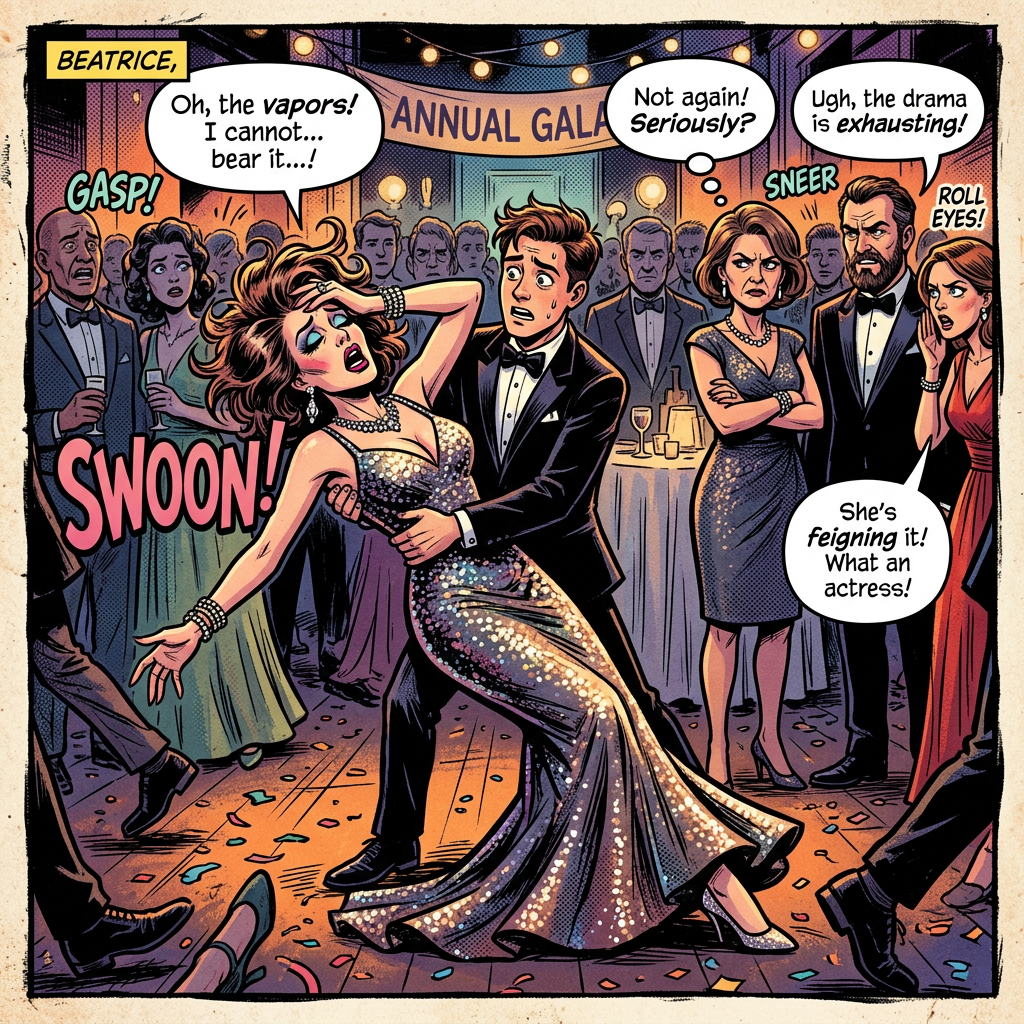
Comic panel: Beatrice swoons at an annual gala while guests say “GASP!”, “SWOON!”, “Not again!”, “Seriously?”, “Ugh, the drama is exhausting!”, “SNEER”, “ROLL EYES!”, and “She’s feigning it! What an actress!”
At the annual gala, Beatrice dramatically swoons as guests react with disbelief and concern.

I am still ruminating over a stranger catching an attitude with me, at Sprouts of all places. But this moment has now created two essays to finish the 30 Blog posts in 30 days, and they’re pretty strong, according to the people in my life, and a stranger with a stank face and probably an itchy butthole. I have been living in a state of high theatricality since approximately the 80s. I was recently informed once again that I am “overdramatic.” Naturally, I spent the rest of the evening silently ruminating on this diagnosis, holding a full-blown internal tribunal while processing a quiet loss.

It got me thinking about my lifelong track record with this label. It turns out that society’s definition of “overdramatic” usually means “having a physical or emotional reaction to something actively happening to you.”
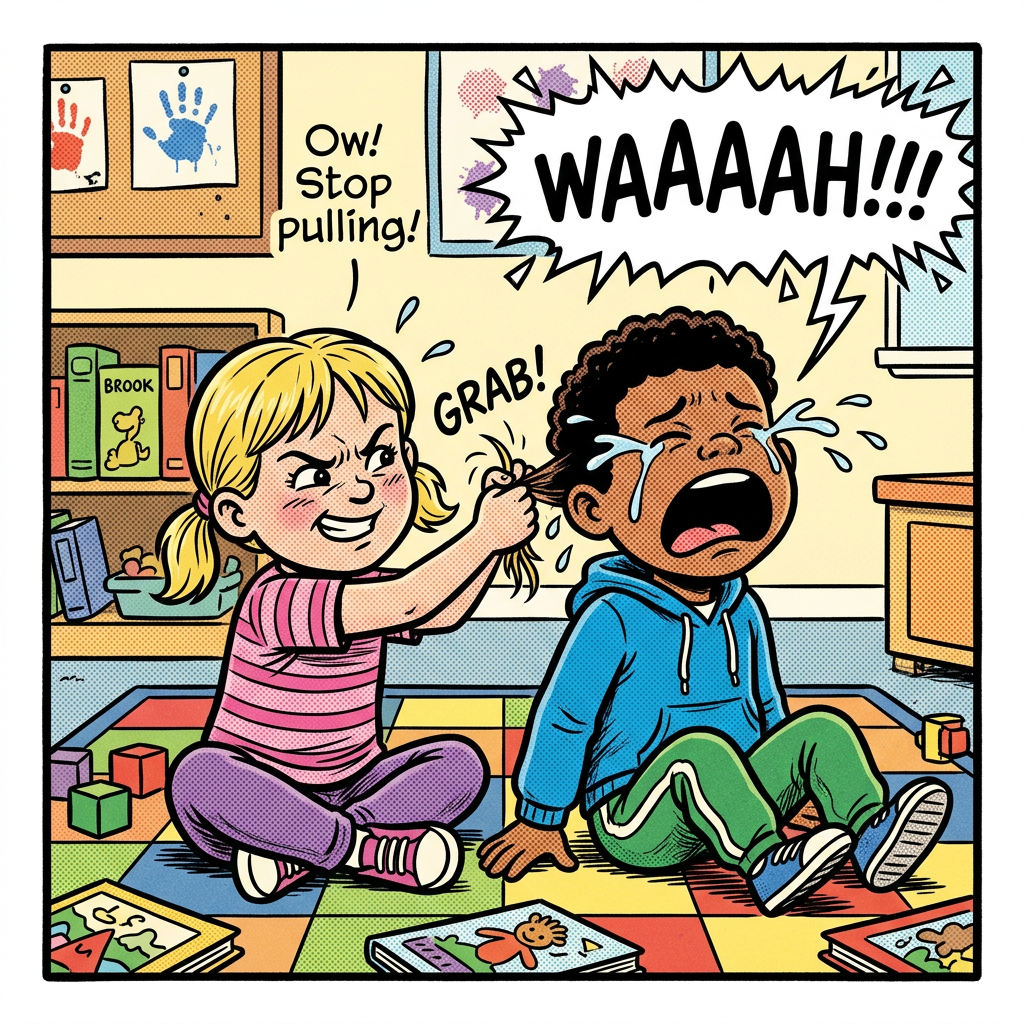
Child pulling another child’s hair while he cries, with text reading “Ow! Stop pulling!”, “GRAB!”, and “WAAAH!!!”
A comic-style classroom scene shows a child pulling another child’s hair as he cries out in pain.

Take my early childhood, for instance. In pre-K, a classmate casually bit me on the cheek. I cried, as one does when being processed as a snack, and was promptly scolded for overreacting. In kindergarten, another child barged into my bathroom stall while I was using the toilet. I screamed to defend my dignity, only to be branded the problem child for breaking the peace.

By middle school, the stakes grew higher. During a cafeteria food fight, a boy launched a rogue apple directly into my face with missile-like accuracy, shattering my glasses and swelling my eye shut. Vice Principal Mr. Levy, who, mathematically speaking, is likely retired or floating in the great beyond by now, handed me detention. The offense? Crying too loudly about having an apple hit my eye, and my left eye starting to happen in my socket. When my grandmother pointed out the absolute logical absurdity of punishing the kid with the broken face and crushed specs, the school’s defense was essentially: “Well, she was being dramatic.”
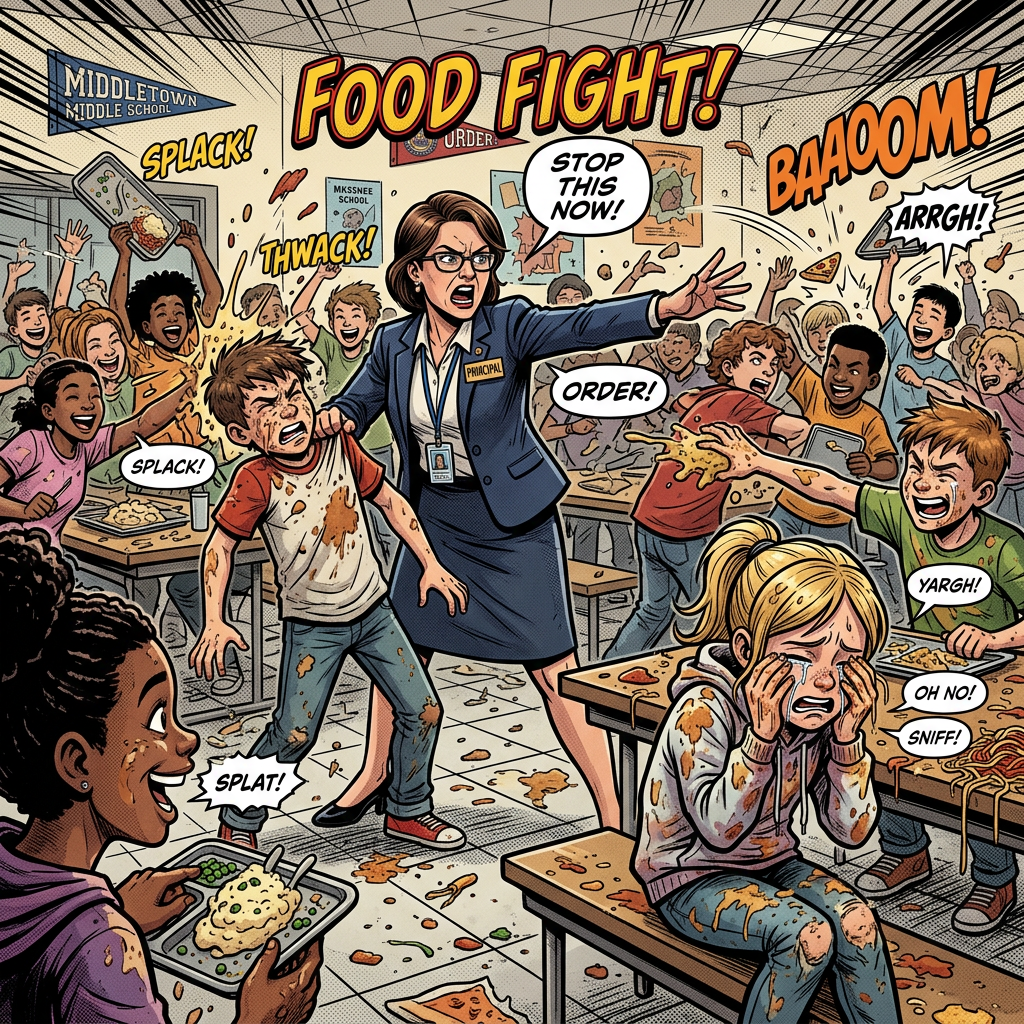
Comic-style school food fight with principal shouting STOP THIS NOW!
A furious principal struggles to stop an all-out food fight in the school cafeteria.

Looking back, none of these moments were acts of hyperbole. I wasn’t throwing myself onto a fainting couch because the local café ran out of oat milk; I was experiencing basic human cause-and-effect. A bite hurts. A broken pair of glasses hurts. Grief hurts. But when you are labeled “the dramatic one,” your genuine pain gets reclassified as a performance.

Don’t get me wrong, I can admit when I’m being extra. I have the heart of a theater kid, even if I ended up better suited for stage crew than the spotlight. I know what true drama looks like, and I am fully capable of owning up to my own theatrics when I actually pull them. But there is a massive difference between putting on a show and simply refusing to be emotionally paralyzed.

We live in a culture that seems increasingly obsessed with emotional constipation. We are expected to take hit after hit, literal or metaphorical, with the cool, stoic detachment of a statue. If you react, you’re “doing too much.” If you speak up, you’re “emotionally dumping.” We’ve weaponized therapy to tell people to sit down, shut up, and keep their feelings tucked neatly away where no one else has to look at them.

The irony is that denying people the right to feel doesn’t eliminate emotion; it just forces it to curdle. We end up in a society of suppressed human pressure cookers, wondering why everyone is perpetually on the edge of flying into a rage over the smallest things.

True maturity isn’t about feeling nothing; it’s about knowing the time and place. I know how to be neutral and professional at my desk. But at home, watching a sad film or sitting with the grief of losing someone who loved and cared for me for forty years, I claim the right to be human. I demand the right to cry.

Having feelings doesn’t make you a disaster; it just means you’re awake. The next time someone tells you you’re being “overdramatic” for reacting to real life, consider the source. Often, people who demand total stoicism from others aren’t practicing self-control; they are just uncomfortable with the messiness of real human connection. And honestly? They might be the ones who need a little therapy.

The Truth About Happiness: It’s Not Always Happy

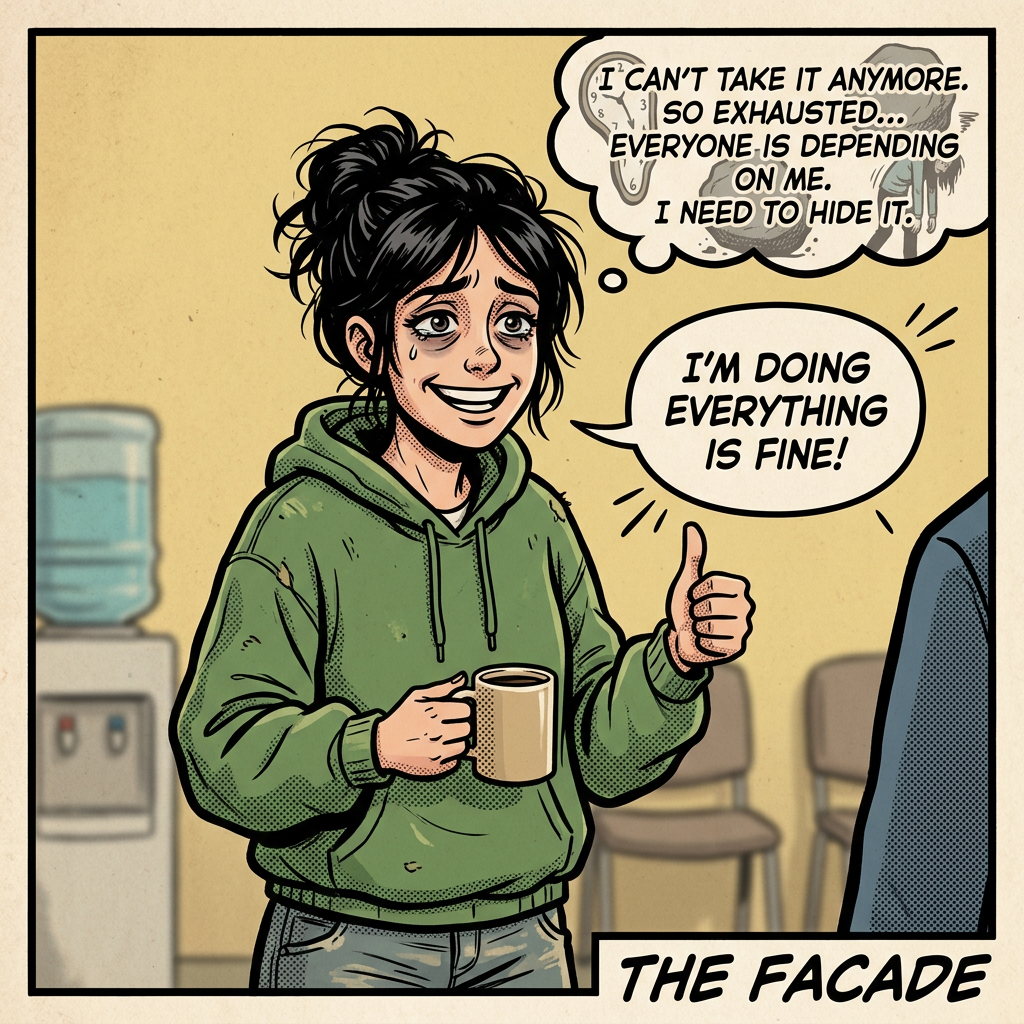
Comic panel: a woman in a green hoodie holds coffee and gives a thumbs-up, saying “I’M DOING EVERYTHING IS FINE!” Her thought bubble reads, “I CAN’T TAKE IT ANYMORE. SO EXHAUSTED... EVERYONE IS DEPENDING ON ME. I NEED TO HIDE IT.” Text below reads “THE FACADE.”
A tired worker hides overwhelming stress behind a reassuring smile and thumbs-up.

“I’m on the pursuit of happiness, and I know/ Everything that shine ain’t always gonna be gold/ Hey, I’ll be fine once I get it/ I’ll be good”- Kid Cudi.

We treat happiness like a destination. Chase it long enough, the thinking goes, and you’ll finally arrive and stay there. But that idea is backward, and it’s setting people up to feel broken for no reason.

Happiness Isn’t a Permanent State

Happiness is tied to a moment, not a lifestyle. It’s the spike you get from a specific event like getting good news, nailing a deal, or a great surprise, not a baseline you maintain forever. Psychologically, it works like a dopamine response: something raises it, then it comes back down. That’s not a flaw in the system. That’s the system.

The cultural script we’re handed says otherwise. We’re told to “pursue happiness,” as if catching it means we’re set for good. But that pursuit can become its own trap, chasing a peak as though it’s a permanent address instead of recognizing it as a visit.

What We Actually Mean Is Contentment

Most of what people call “being happy” is really contentment: a steady, low-key sense that life is okay, that you can handle what’s in front of you. Contentment doesn’t spike and crash the way happiness does. It’s the quieter, sturdier feeling underneath the highlight-reel moments.

Joy is a third, related thing — a recurring capacity to feel light and good, even though it coexists with hard stuff. The people who seem genuinely joyful aren’t immune to sadness or depression. They don’t treat hard days as proof something’s wrong with them. They feel the rough day, name it, talk about it, and move back toward joy without faking their way through the gap.

Why the “Be Happy Always” Pressure Backfires

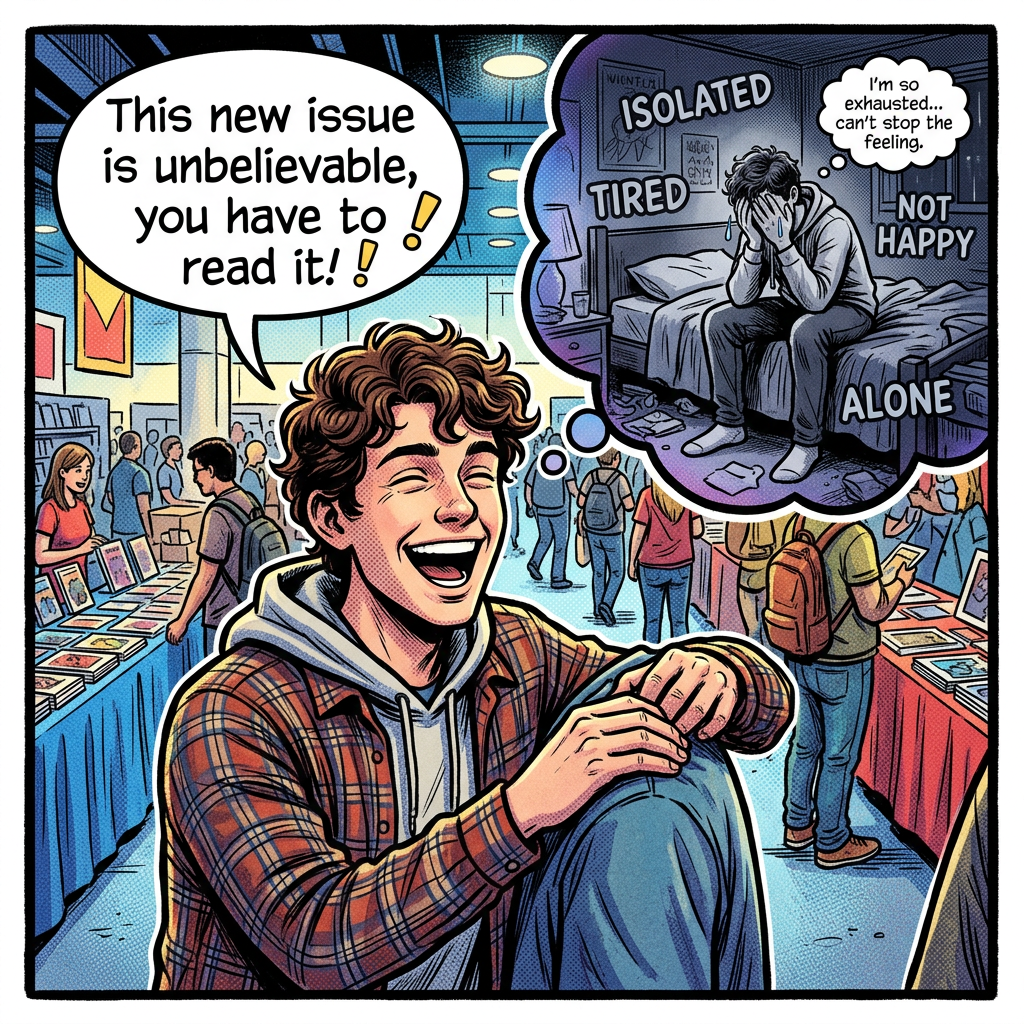
Comic text: “This new issue is unbelievable, you have to read it!” A smiling attendee imagines being isolated, tired, not happy, and alone, thinking, “I’m so exhausted... can’t stop the feeling.”
A cheerful convention attendee conceals feelings of isolation, exhaustion, and unhappiness behind a bright smile.

Telling someone they need to be happy all the time quietly tells them something is wrong with them whenever they’re not. And the truth is, no one is happy 100% of the time; that’s not a personal failure, it’s just how happiness works.

Worse, pushing nonstop happiness as the goal can edge toward something that looks a lot like mania once it’s sustained too long or too forcefully. Authenticity matters more than constant cheerfulness. A person who’s “on” all the time, no exceptions, is worth a second look, not celebration.

Faking it also has a real cost. Forcing yourself to perform happiness instead of working through what you’re actually feeling leads to burnout, and once you experience burnout, it’s much harder to recover from than an honest bad day ever was.

A Better Way to Talk About It

Sadness isn’t the same as depression. Feeling disturbed, sad, or grieving something doesn’t mean you’re broken; it means you’re human, and you’re allowed to feel it. Letting people name their emotions accurately, instead of forcing everything into “happy” or “not happy,” gives them room to actually process what’s going on.

A healthier approach looks like this: something good happens, you notice it, you sit in gratitude for it, and happiness grows out of that rather than demanding a constant happy state and panicking when it slips.

The Real Misconception

The myth isn’t that happiness exists. It’s that happiness is supposed to be constant. It isn’t, and it was never meant to be. What we should actually be building day to day is contentment and joy, with happiness as the bright, occasional spark that visits on top of them. Once we stop conflating the three, we can finally use the right language for what we’re feeling and stop mistaking an honest bad day for a sign that something’s broken.

One of my favorite songs is Kid Cudi’s “Pursuit of Happiness.” You can check out the videoà https://youtu.be/7xzU9Qqdqww?si=xdwbE1tJEFSvIPDp

Also, if you would like to buy me some Fresh Market Cookies to bring some happiness à Ko-fi.com/chemichelletales

Blog at WordPress.com.

Up ↑