
The Springer Thesis: How Salacious Talk Shows Kept America Sane
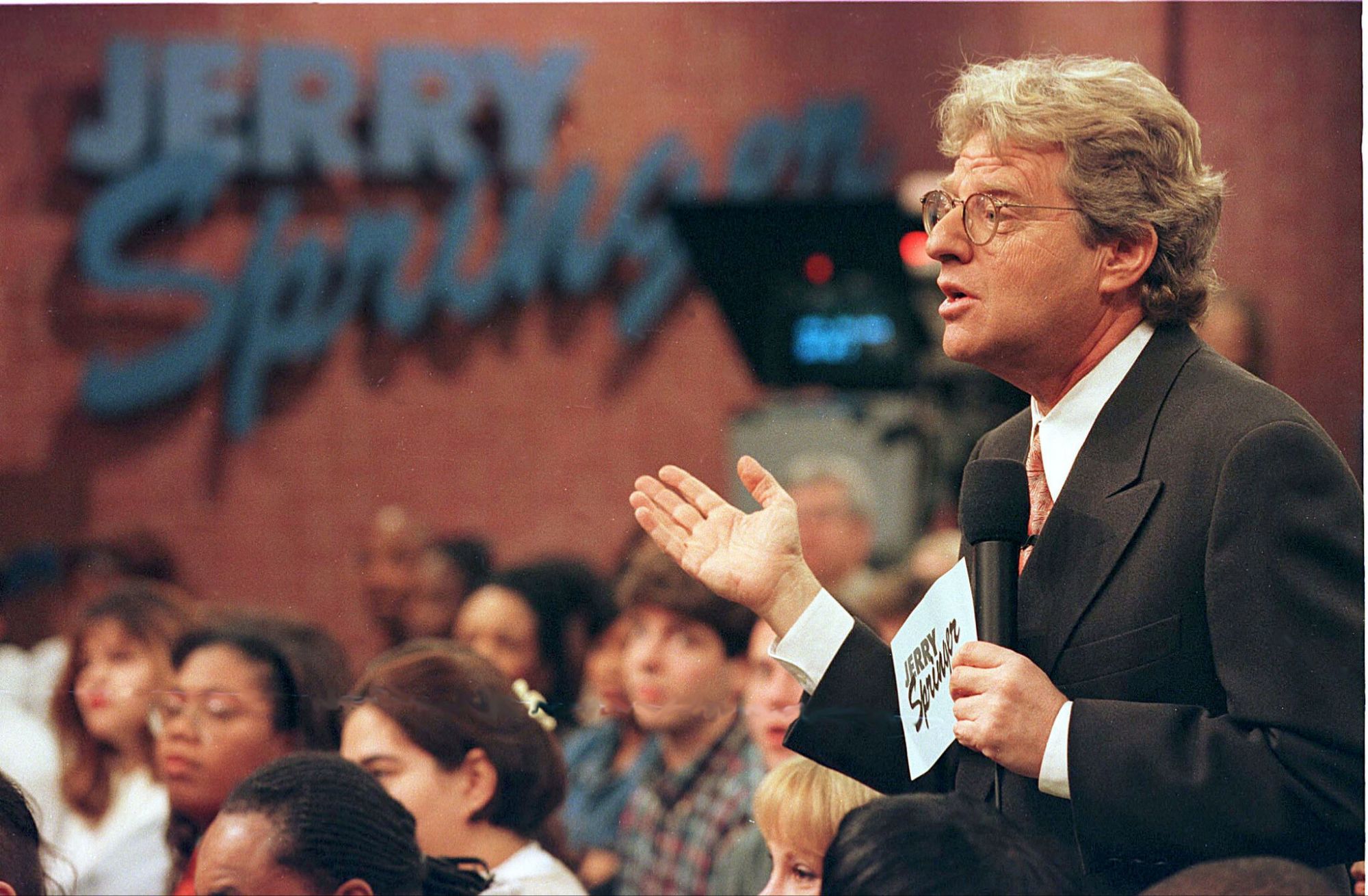
Here is an unpopular opinion: we need to bring back Jerry Springer. Not the man himself, that how you end up with an undead legion of idiots. Also, God rest his soul but everything he represented. The chaos, the confrontation, the unfiltered audacity of it all. I know how that sounds. I know the reflexive response is to say that Jerry Springer was the fall of America, that Maury Povich and Sally Jesse Raphael and Jenny Jones were symptoms of everything wrong with this country. But what if we had it exactly backwards? What if those shows weren’t the disease at all what if they were the Band-Aid holding us together?
A Brief History of the Talk Show
To understand what we lost, you have to understand what we had. I was born in 1983, which means I grew up watching this entire arc in real time. In the 1980s, the landscape was dominated by Oprah Winfrey, Phil Donahue, and Sally Jesse Raphael. These were scandalous shows by the standards of the time, but they came wrapped in a moral framework. There was always a lesson, always a reckoning, always a sense that the host was guiding the audience somewhere meaningful. Then came the 1990s, and with them the golden age of daytime television. Jerry Springer, Maury Povich, Jenny Jones, Ricki Lake these shows stripped away the pretense and gave the audience something rawer, louder, and infinitely more watchable. People aired their most embarrassing secrets on national television. Paternity tests were revealed in front of studio audiences. Estranged relatives confronted each other under hot studio lights. It was messy and it was real and millions of people tuned in every single day.
Then something shifted. By the 2000s- 2010s, the talk show had reinvented itself around the Ellen DeGeneres model celebrity interviews, feel-good segments, viral dance moments. The audacity was gone. The mess was gone. What replaced it was relentlessly positive, carefully curated, and, if we’re being honest, a little bit boring. By the 2020s, the format had nearly collapsed entirely, replaced by a fragmented constellation of social media platforms that promised to deliver the same fix but never quite could.
What Those Shows Actually Did
Here is what nobody wants to admit: those salacious talk shows were doing real cultural work. They served functions that we didn’t recognize as functions until they were gone.
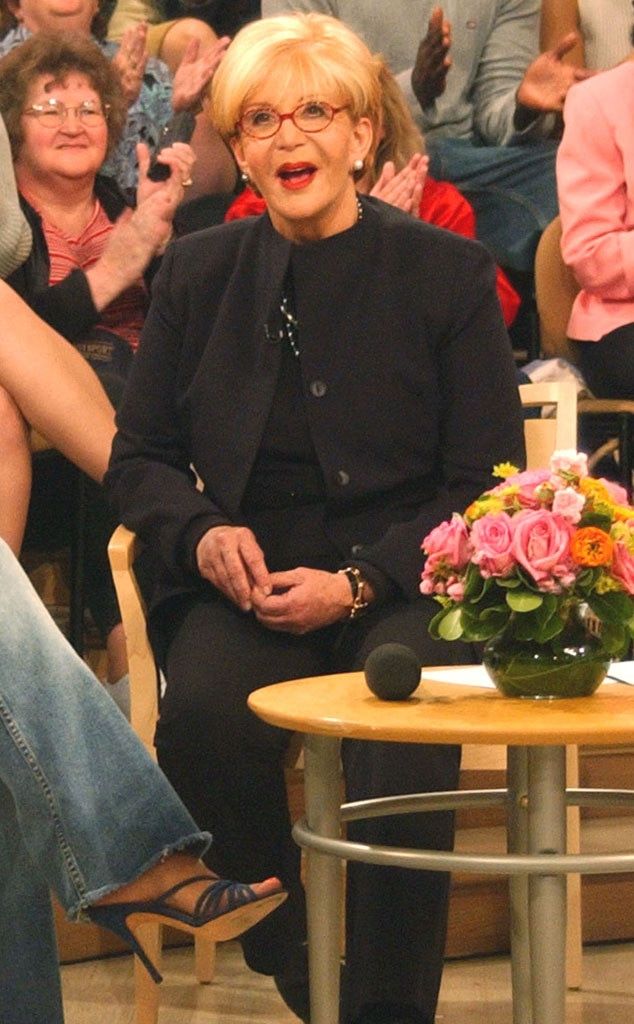
The first and most obvious was public accountability When someone with absolutely no awareness walked onto the Jerry Springer stage convinced that their behavior was perfectly reasonable, the audience disabused them of that notion immediately. Sally Jesse Raphael, with those iconic red-framed glasses and her oversized blazer, had a gift for calling people to the carpet with a kind of no-nonsense clarity that was genuinely clarifying. There was a social check built into that format. If you were living your life sideways, the talk show was a mirror that showed you exactly how sideways it was.
The second function was subtler but just as important: those shows (Springer, Ricki, Jenny Jones) scratched an itch that nothing else can scratch. World Star tried, but it never gave a true moral resolution, just drama. The drama, through juicy and satisfying to watch in other people’s lives, while your own lives remain drama free. Having a salacious talk show with a host to contextualize the issue, the drama, and calling out the delusional b*llsh!t. There is something deep in the human brain that craves this. It’s not lowbrow. It’s not shameful. It’s just simply human need and trait. And the talk show, at its salacious peak, was the only format that delivered it reliably, consistently, and at scale.
Third, and perhaps most surprisingly, those shows snuck in genuine education. I have always given credit to Bill Nye the Science Guy and Star Trek: The Next Generation for sparking my love of science. But if I’m being honest? Maury Povich and his DNA tests deserve some of that credit too. Hearing “you are NOT the father” week after week made me genuinely curious about how DNA testing worked, how paternity could be proven, what science looked like. Furthermore, it was a stern reinforcement of why people should use birth control and protection. The number of people sleeping with the whole town always had me asking about STIs. Ricki Lake, meanwhile, was doing something quietly radical normalizing LGBTQ+ relationships and pushing back against homophobia at a time when mainstream culture was far less willing to do so. These shows were not as dumb as they looked.
Why Social Media Doesn’t Fill the Gap
When the talk shows disappeared, we told ourselves we had something better. TikTok, Instagram, YouTube, Snapchat are an entire ecosystem of user-generated drama, available twenty-four hours a day. And yet something is missing. The itch is not being scratched. Yes, we had commentators pointing out the issues with the internet drama. It’s not the same. It lacked resolution.
The resolution was mediation and explained the moral of the story. On a talk show, there was always a host a Sally Jesse, a Maury, a Ricki whose job was to hold the space, to name what was happening, to look the person with no shame dead in the eyes and says, “you cannot be serious right now.” Forcing the party to have some accountability. The question of behavior, calling out delusional logic, was built into the architecture of the format. Social media has no such architecture. Drama on TikTok is consequence-free (sidenote not anymore, people are getting divorced, fired from jobs losing sponsorships). You can post your most unhinged behavior and the algorithm will reward you for it. There is no Sally Jesse to drag you to the carpet. There is no studio audience to gasp. There is no moment where someone you respect looks at you and says, clearly and publicly, that your life is in shambles.
And because that moment no longer exists, people no longer know their lives are in shambles. That is the real crisis. It is not that people are behaving badly, people have always behaved badly. It is that the cultural mechanism that once reflected that behavior back at them, that once made them feel the weight of public judgment, has been dismantled. We thought we were evolving past it. What we were doing was removing the mirror.
The Path Forward: Healing and Drama
The answer is not simply to resurrect Jerry Springer format. That moment has passed, and honestly, some of what those shows did was genuinely harmful, it was rooted in racism, homophobia, and the exploitation of vulnerable people for ratings. We do not need to bring that back.
What we need is the next evolution of the format one that holds onto the accountability and the drama while adding something that was often missing: healing. The talk show arc was always supposed to move in this direction. You start with the spectacle “I have sixteen baby mamas and none of them know about each other” and you work your way toward the question underneath it: “why are you like this, and what would it take to be different?” The 2000s and 2010s gestured toward this transition, and hosts like Iyanla Vanzant were genuinely trying to bridge that gap.
The clearest example of what this could look like is Karamo. He saw the void and understood it. He knew that America still needed someone to look a person in the eye and say, without flinching, that their behavior was unacceptable but he also knew that the confrontation had to be paired with compassion, with curiosity, with a genuine desire to help the person find their way out. That is the model. Call out the audacity, then do the healing work. Don’t just expose the wound treat it.
Conclusion
Let me be direct about something. America is the spoiled, disillusioned child of the world. We have convinced ourselves that we are the greatest, the smartest, the most exceptional while simultaneously being among the most overworked, the most indebted, and the most unwilling to look honestly at ourselves. We demonized the salacious talk show because we wanted to believe we were better than it. We were not. We are not. The soul of this country will not be saved by political speeches or policy debates or any of the other mechanisms we have decided are appropriately serious. It will be saved if it is saved at all by honest, unflinching, occasionally uncomfortable public reckoning. By someone on a stage asking hard questions and refusing to accept non-answers. By a format that says: you can come here with your mess, and we will not look away from it, and we will not let you look away from it either.
Bring back the salacious talk show. Bring it back smarter, bring it back kinder, bring it back with the healing built in. But bring it back. America needs the mirror. We have needed it for a long time.
If you would like more blogs like this… or I will bring Jerry Springer Drama to your door Ko-fi.com/chemichelletales

