The Scales of Desire: Seduction, Decans, and the Complex Art of the Libra Men

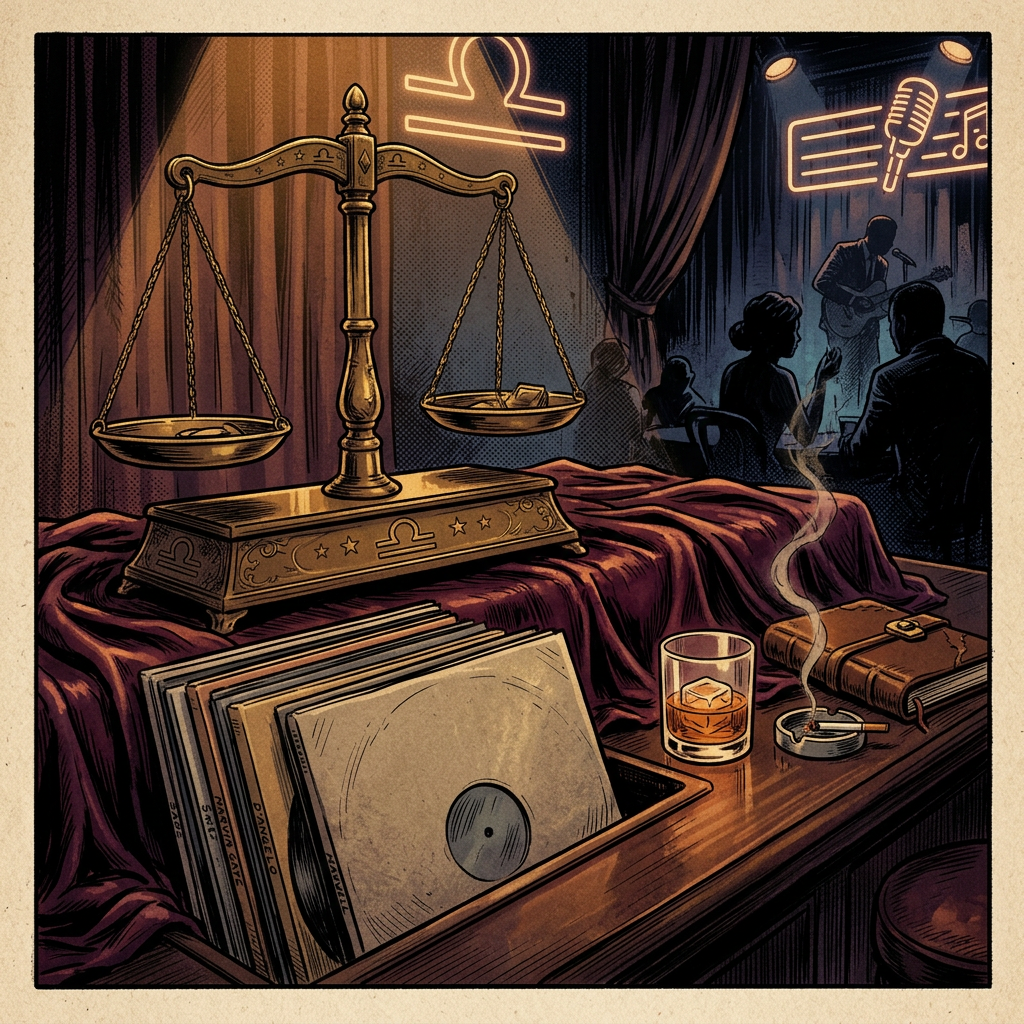
Libra scales beside vinyl records, whiskey, cigar, and a jazz performer
A vintage-inspired Libra scene blends balanced scales, jazz music, vinyl records, and evening indulgence.

Few archetypes dominate late-night playlists with a romantic lure like the male R&B crooner, just as Geminis dominate hip-hop. Few zodiac signs seem as innately engineered for the R&B crooner role as Libra. Governed by Venus, the seventh sign of the zodiac is celebrated for aesthetic sensibility, balance, charm, and partnership. In modern R&B, this energy crafts anthems that define sexual longing, smooth diplomacy, and emotional tension.

Yet underneath the polished falsettos and silk button-downs lies an intricate, often contradictory psychology. Far from simple romantics, Libra R&B men carry an allure as calculated as it is intoxicating, blending genuine passion with strategic manipulation, stubborn independence, and a fierce demand for justice. This blog post focuses only on the men; I need a separate post for the ladies.

The Anatomy of Seduction and Decanoic Expression

To understand the core of the Libra R&B catalog, we need to look at Ginuwine. From the late 1990s through the mid-2000s, his music created an immersive world of raw physical desire wrapped in suave vulnerability. Tracks like “So Anxious” do not merely establish a sensual mood; they function as operational blueprints for the archetype. The urgency of a late-night rendezvous, the tactile focus on touch, and the deliberate choreography of intimacy speak directly to an elevated Venusian instinct: “Said as soon as you hit the door/ I’m pull you down on the floor/And before we get to touch the bed/ Baby back up every word you said/And before we get to hit the lights/ And before we start the candlelight/Baby girl I wanna bump and grind/ This is something that is on my mind” “So Anxious”-Ginuwine.

Do you not see the attributes of a Libra, the charm, the desire, words acting as a spell to get you in his bed. Well, you won’t be in his bed but on the floor.

Astrologically, this behavior corresponds with the traditional decans of the sign:

  • First Decan (0° to 10°, September 23 – October 2): Pure Venus energy. Artists governed by pure Venusian influence channel effortless beauty, kinetic magnetism, and romantic indulgence. This is where Lucky Daye falls into the chart; a raw, sensual appeal, endurance as a performer, and stage charisma showcase this unvarnished aesthetic power.
  • Second Decan (10° to 20°, October 3 – October 12): Uranus. Introducing an unconventional, forward-thinking drive, this decan values personal autonomy and distinct individuality. More women from R&B fall into this category.
  • Third Decan (20° to 30°, October 13 – October 22): Mercury. Infused with sharp intellect, verbal agility, and structural discipline, this decan bridges art with legacy. Usher, Ne-Yo, Eric Benet, and Ginuwine fall into this decan.  illustrates this energy seamlessly. His longevity, vocal and dance mastery, and deliberate business acumen reflect a calculated mind using communication and performance to secure generational stability.

Ginuwine’s astrological energy is Physical Magnetism and seduction.  He defines unapologetic sensuality, timeless stage allure, and a tactile focus on his mission of physical intimacy.  Then there’s Ne-Yo, who rocked the world with a modern energy of romance, woven with reverence for women, in songs like Miss Independent.  Ne-Yo epitomizes this current master songwriter, balancing traditional romantic lyricism with an acute awareness of his own human evolution. Usher has dominated R&B since 1994, with classics like “You Make Me Wanna,” “Confessions,” and “Superstar.”  Usher has a strategic intellect about love, while weaving longevity. He embodies a level of perfectionism in his performances. In comparison, creating everlasting legacy that cannot be questioned.  Eric Benet shows he can emote pure romance and love through a song, yet still tells people on social media to vote and stay aware, with his string of pearls.  

The Decan Spectrum in Contemporary R&B Beneath the Polish: The Shadow Side and Calculated Justice

The public narrative surrounding Libras often centers on indecisiveness and conflict-avoidance, but this reads the sign incorrectly. A Libra man’s hesitation is rarely an inability to choose; it is a tactical assessment designed to ensure he secures precisely what he desires on his own terms. Rather than bold, aggressive demands, their decisions are governed by seductive diplomacy. A good example is how Ginuwine handled TGT and went back to doing his own musical thing. When unevolved Libra, however, the archetype reveals a turbulent shadow. One area that comes from unevolved Libra is Shifting Boundaries: Without clear self-imposed limits, they slide into passive dynamics where they feel exploited, until internal resentment triggers a sudden, absolute cut-off. Another aspect you may encounter is Reputation-Preserving Dishonesty: While a fire sign like Sagittarius embellishes stories to entertain, the unevolved Libra man lies primarily for self-preservation—to avoid conflict, preserve an immaculate image, or deflect immediate accountability. Lastly, Retributive Justice: Venus is not merely the planet of flowers and whispers; historically, it is equally a deity of retribution. As mirrored by contemporary figures like Cardi B in her legal and public disputes, when a Libra feels fundamentally wronged, their pursuit of restoration is exhaustive. An offended Libra does not walk away; they orchestrate a situation that leaves their opponent stranded while maintaining an air of detached innocence. Review how Lucky Daye handled his situation with his label, and how he came back with musical vengeance.

Grounding the Scales: Longevity, Wealth, and Domestic Stability

Despite their reputation for running hot and cold during youthful “phases,” evolved Libras transform into remarkably grounded partners, parents, and business professionals. Their relationship with resources is quiet but deliberate. Like their sister Venusian sign, Taurus, they have a deep understanding of financial resilience. They balance public expenditures with protected reserves, often working rigorously through mid-life to finance legacy goals, such as their children’s education, without destabilizing their long-term security.

In domestic life, the evolved Libra channels their obsession with harmony directly into their household. Their natural diplomatic instincts and rejection of petty friction foster balanced, forward-thinking environments for their children.

The Libra male R&B artist is far more complex than a smooth vocalist singing sweet melodies under soft lights. He is a study in calculated balance: equal parts hopeless romantic and cunning strategist, family guardian and seductive trickster. To truly appreciate their music, you have to understand that beneath the promises of devotion lies an acute mind, always measuring the scales and weighing every consequence.

Until Next Time,

Che Michelle

Also, do not date Libra men; listen to their music. It’s for your own sanity. 😊

If you want a specific astrology topic comment below!

Am I The Drama at Sprouts? A One-Woman Grocery Store Meltdown

AM I THE DRAMA? A One-Woman Tragedy in Four Bottles of Alkaline Water (they were .69 cents a bottle a steal)

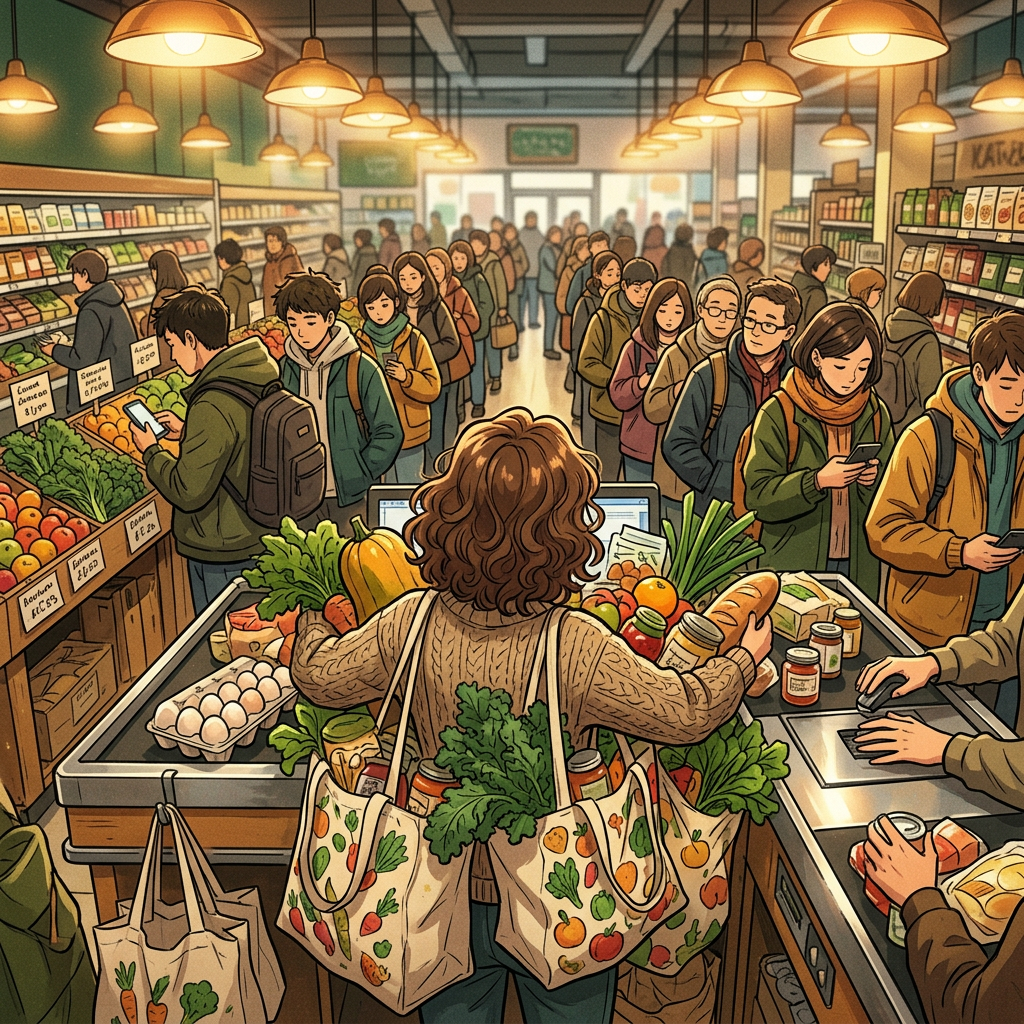
Crowded grocery market with shoppers choosing produce and checking out
Shoppers fill a warmly lit grocery market while selecting fresh produce and everyday essentials.

“They say, “Cardi, you tweakin’,” nah, I don’t be tweakin’ enough
Bitches be doin’ shit, and I been letting it slide, and I don’t be bringin’ it up
Bitches be out here tellin’ lies about me, and y’all just be eating it up
But when I drag her to hell, “Cardi, you evil as fuck”” – Cardi B “Dead”

Picture it. A Monday. Not just Monday. My Standard routine with my true evening ritual: I go workout and sweat the stress of the day away. Then I go to Staples run to make my copies for trivia, and then and only then the hallowed grocery pilgrimage for lunch for the week. I typically go to Trader’s Joes but tonight I chose Sprouts. I chose poorly.

I walk into Sprouts, a little to happy-go-lucky I am in my Stepford Wives mindset. I end up with the iconic Strawberry Poppy Salad and 4 bottles of alkaline water. I am trying to be healthy. I am working on my self-improvement. No kombucha, because I am TURNING OVER A NEW LEAF, thank you very much. I gather my sad little salad and my four bottles of fancy water like the disciplined baddie I’m trying to become.

Shopping cart surrounded by scattered fruits and vegetables in a dark grocery store
A lone shopping cart stands amid scattered produce in a shadowy grocery store aisle.

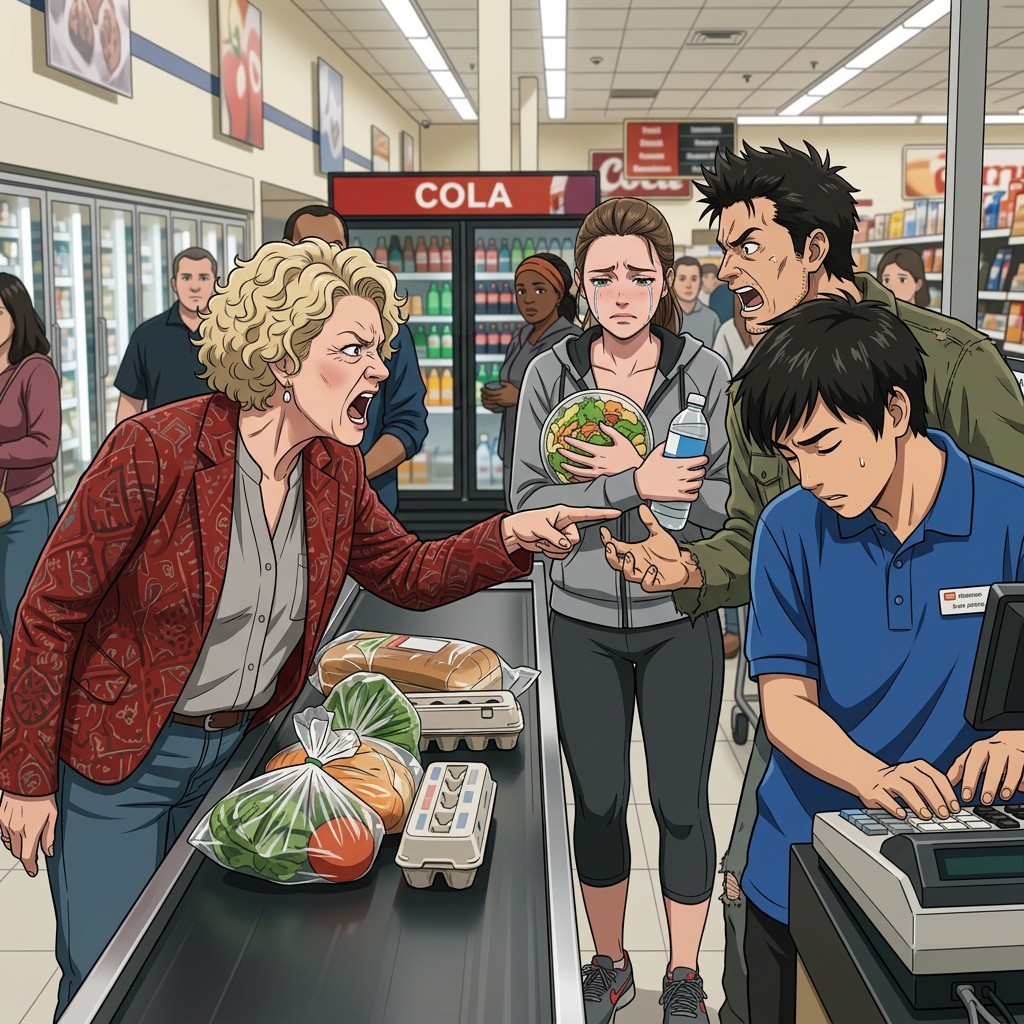
And then. THEN!!! I approached the register. I forgot to put the gray bar up to separate the items from the customer in front of me. Forgetting about the sacred conveyor belt divider, that tiny plastic bar that separates each customer, is a crime against humanity. I place my items down like an absolute rookie, and this woman with a bad weave and attitude turns to me with the fury of a thousand suns and snaps, “Can I finish?” rolling her eyes so hard I felt the breeze. I was wondering if she rolled any harder could she see her past life? A part of me wishes I channeled my inner Cardi B, but I channeled my inner Catholic.

I apologize. Dramatically, sure, I’ll own that “OMG, I AM SO SORRY”. But I was SINCERE. And she has the AUDACITY to tell me “Stop being dramatic?? Ma’am. Ma’am. You are the one rolling your eyes, from me forgetting the little gray divider. It’s you, YOU ARE THE DRAMA. The projection of frustration, on a stranger, on me!!! The absolute projection happening at register 1 of a Sprouts on a Monday night.

So, I slink off to another line like a woman exiled from the line of purchasing, and the universe says “We are not done with you yet” the next two cashiers proceed to psychologically ice me out. One’s staring at his name badge like it holds the secrets of the universe. I’m standing there, water bottles and salad, wondering if I should just leave the salad and my dignity behind and drive home in shame.

Customer points angrily at cashier while shoppers wait at grocery checkout
A tense grocery checkout interaction unfolds as a customer questions the cashier while another shopper waits nearby.

It would be great to say I persevered. I got my salad. I got my water. I got home. But I didn’t, I instead put all the items back and left. As someone who desired that delicious salad, while trying to load 2027 Baddie up. One thought echoed through my head was she now thinks I’m dramatic, and honestly? I might be proving her right by mapping out every other Sprouts location in a 30-mile radius. So, I never have to see her again. Is that dramatic? Absolutely. Do I regret it? We’ll revisit going to THAT Sprouts in November of 2028.

But here’s the real ending, I left with no food, because I felt disrespected. Past the bit: that customer was having a bad day that had nothing to do with me, and for one hot second I almost let her bad mood become my bad mood too. I didn’t. I said sorry, I took the L, I left without my Strawberry Poppy Salad. But I kept my Monday intact, with the good vibes I was feeling.

That’s the whole lesson, dramatics aside somebody else’s nasty attitude is theirs. You can hand it right back to them without ever picking it up yourself.  I will get a better salad another day, and that delicious Strawberry Salad with feta cheese can feed another person, just not me. I ended up with a bag of Smartfood White Cheddar Popcorn, so much for being a baddie.

Until Next Time,

Che Michelle

If you would like to sponsor my next Salad, not from that Sprouts à  Ko-fi.com/chemichelletales

What I really wanted to say to this woman, but my brain shut it down à https://youtube.com/shorts/F7TTLla_csQ?is=mC0vRQhPJjc5sWNF

Handle With Care: A Survival Guide for Friends of Writers

Handle With Care: A Survival Guide for Friends of Writers

It is a late Sunday night. I am currently sitting in the driver’s seat of my parked car, in front of my house, utterly paralyzed by exhaustion and avoiding the thirty-foot walk to my front door. It’s that sacred, slightly delirious twilight hour when the engine is off, the streetlights hum, and your brain decides: Yes, this is the exact moment to unpack the existential baggage of being an aspiring author.

A few years ago, I attempted to write a book titled The Secret Son of Hephaestus. The premise was born in a writing class: What if Aphrodite and Hephaestus secretly had a son, but Hephaestus had to hide the child in the shadows so his mother, Hera, wouldn’t obliterate him in a fit of Olympian wrath? It was layered, tragic, and entirely mine. Naturally, the moment I pitched the idea, someone chimed in with, “Oh, so it’s basically Percy Jackson.”

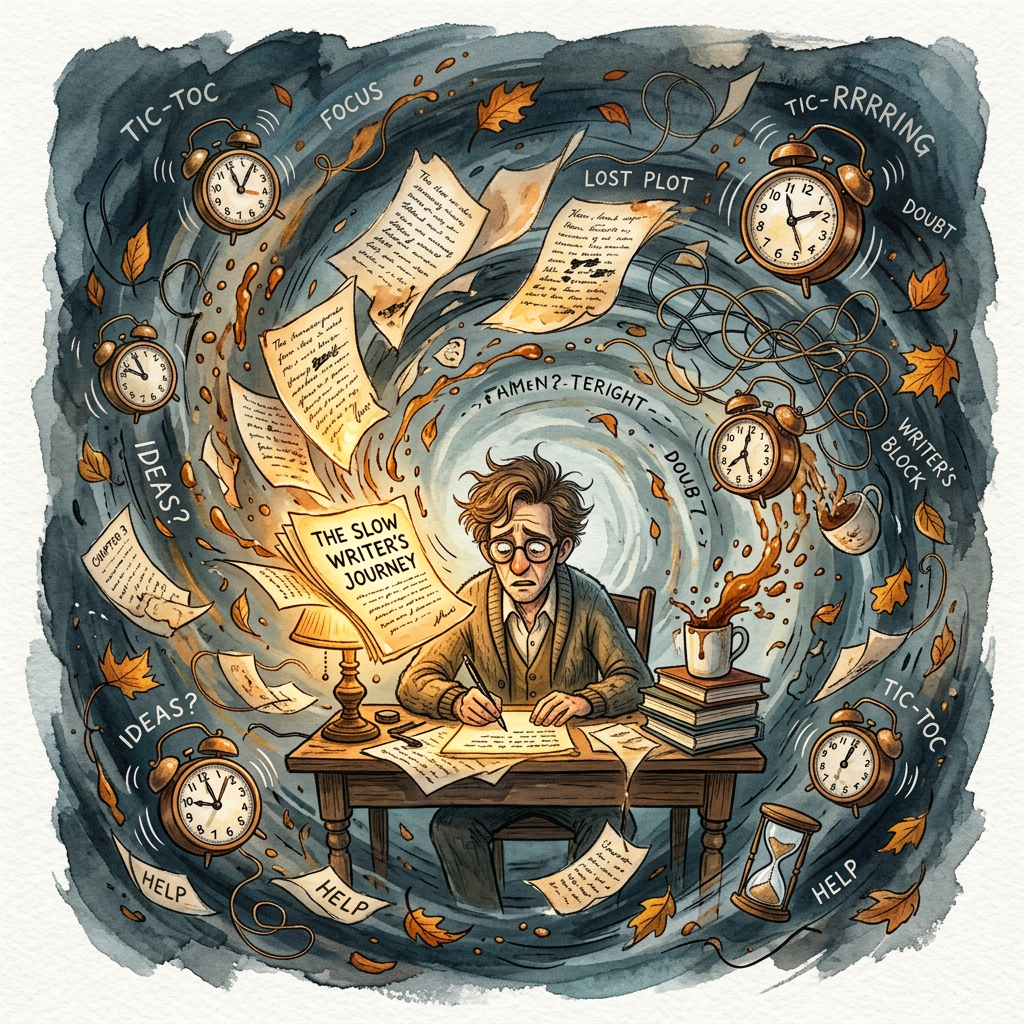
Illustration titled THE SLOW WRITER'S JOURNEY, showing a writer surrounded by clocks, papers, and words including FOCUS, LOST PLOT, DOUBT, IDEAS?, HELP, and WRITER'S BLOCK.
A frustrated writer struggles to create as clocks, tangled thoughts, and unfinished pages swirl around him.

For the record: I have never read Percy Jackson. Nor was it “just fanfiction,” as another friend so cheerfully labeled it. It was a mythological retelling—an ancient and respected literary tradition, thank you very much. But that sting highlights an uncomfortable reality every creative person eventually confronts: Writers and their friends exist in an ecosystem as fragile as a draft saved only on a glitching USB stick.

In my years of typing, stalling, and voice-recording rants in parking lots, I have deduced that every writer has four distinct categories of friends:

  1. The Ghosts: They will never read your work, and they will never support it. If you sent them your manuscript, they’d probably use it as a coaster.
  2. The Cheerleaders Without Glasses: They will never read your work, but they will show up to your readings, buy you coffee, suggest cool indie bookstores, and shout your praises from the digital rooftops. Bless them; we need them.
  3. The Unqualified Critics: They don’t actually understand your genre, style, or creative soul, yet they wield their critiques like a toddler swinging a sledgehammer.
  4. The Unicorns: Cherish them. Guard them with your life. They read your work, remember your characters’ names, and aggressively text you at midnight asking: “When do I get chapter four?”

I recently stumbled upon a viral Instagram post outlining the unspoken rules of loving someone who writes. It resonated so deeply that I felt called out from my car seat. So, as a public service announcement to the well-meaning civilians who share their lives with storytellers, allow me to translate what’s really going on behind the blinking cursor.

1. Hitting “Send” Is an Act of Raw Vulnerability

If a writer hands you a manuscript or emails you a Google Doc, understand that hitting Send took more courage than a lion tamer stepping into the cage. We are essentially handing you our bruised, exposed nervous system printed in 12-point Times New Roman.

I was once on vacation after getting edits back from a writing group. I handed a chapter to a friend whose opinion I truly treasured. They made a parade of polite excuses about how they had “too much on their reading list” to look at it—and then spent the next three days complaining aloud about the terrible published novel they were reading on the beach.

You are not obligated to read my work. Truly. But if you have time to complain about a celebrity memoir you hate, watching you deliberately avoid twenty pages of my soul feels like a slow paper cut. Don’t hit us with, “Oh, the title looks cute!” It’s okay to say, “I don’t have the bandwidth right now, but I’m rooting for you.” Radical honesty beats a transparent brush-off every time.

2. A “Good Writing Day” Can Salvage Our Entire Existence

Writing in the modern world is an uphill sprint through molasses. We don’t live in the 1980s where you could just shut off the cathode-ray television, sit at an oak desk in absolute silence, and hammer out prose without distraction. We live in an era where modern life demands two jobs, libraries close at 5:00 PM, Barnes & Noble tore out all their good tables, coffee shops kick you out by 2:00 PM, and your phone constantly lures you into a thirty-minute TikTok doom-scroll.

Add in real life, depression, and the sheer exhaustion of having ideas in your head but zero energy in your limbs, and stringing 500 coherent words together feels like summiting Everest. If your writer friend announces they had a good writing day, treat it like they just won an Olympic bronze. My boyfriend will light up and say, “I’m so glad you got some writing today!” That single reaction will carry me through the rest of the week.

3. Staring Blankly Out the Window Counts as Hard Labor

When you catch us zoning out into the middle distance, slack-jawed and glassy-eyed, we are not taking a mental nap. We are actively directing a three-act tragedy behind our retinas.

We are deciding whether Janelle would actually slap her boss or insult his loafers. We are blocking scenes. We are figuring out how to describe body language without using the phrase “she let out a breath she didn’t know she was holding.” Once, while sitting in this very car, I watched a bizarre argument between strangers unfold across the street—it had an inciting incident, rising action, and a climax so dramatic it felt like Shakespeare had a fever dream in a suburb. I was taking mental notes the entire time. That wasn’t loitering; that was occupational development. (And yes, wandering a bookstore for two hours is also taxable research.)

4. When We Say the Book Is Trash, Wait Forty-Eight Hours

Every writer has a day where they re-read their morning draft, decide they are an illiterate fraud, and solemnly swear to burn their laptop and take up goat farming. The Secret Son of Hephaestus is currently in literary purgatory because one day I decided the first three chapters were utter garbage.

Give us two or three days. A nap, a sandwich, and a little distance usually reveal that the manuscript isn’t irredeemable trash after all; it just needs a tightened paragraph, a deleted subplot, and slightly better lighting.

5. Specificity Is the Highest Form of Love

If you want to make a writer cry happy tears, do two things: remember our characters’ names, and tell us specifically what made you react.

A coworker once read a romance short story I wrote and casually remarked, “Sophia really deserves her own story after what happened with Camille.” I practically levitated. She remembered Sophia! She treated my imaginary friend like an actual human being!

Saying “It was good” is the conversational equivalent of a pat on the head. But telling us, “I screamed when he slammed the door,” or “This paragraph felt a little rushed, but that one line made me laugh out loud”—that is golden. It proves you were actually inside the world we spent months building in our heads.

At the end of the day, slow writers are still serious writers. Unread writers are still writers. We aren’t expecting our inner circles to act as an uncompensated, unpaid PR agency or a literary agency board.

All we ask is mindfulness. Be honest if you don’t have the time. Be kind if it’s not your cup of tea. But if you’re going to be in the passenger seat of our creative lives, maybe don’t tell us we’re writing fanfiction when we’re trying to build an empire.

Now, if you’ll excuse me, I’ve been sitting in this driveway for fifteen minutes; the car is getting cold, and I have thirty days of blog posts to conquer. Bam. Good night.

Here is the link for the post that sparked this essay: https://www.instagram.com/p/DcoHebUESAD/?stkn=NGN3OGJpdmt3Z3d2

Also, if you would like to read my short stories or chapters, comment belowà I want to read your works ☺️

If you want to support my coffee shop visits: https://ko-fi.com/chemichelletales

The Truth About Happiness: It’s Not Always Happy

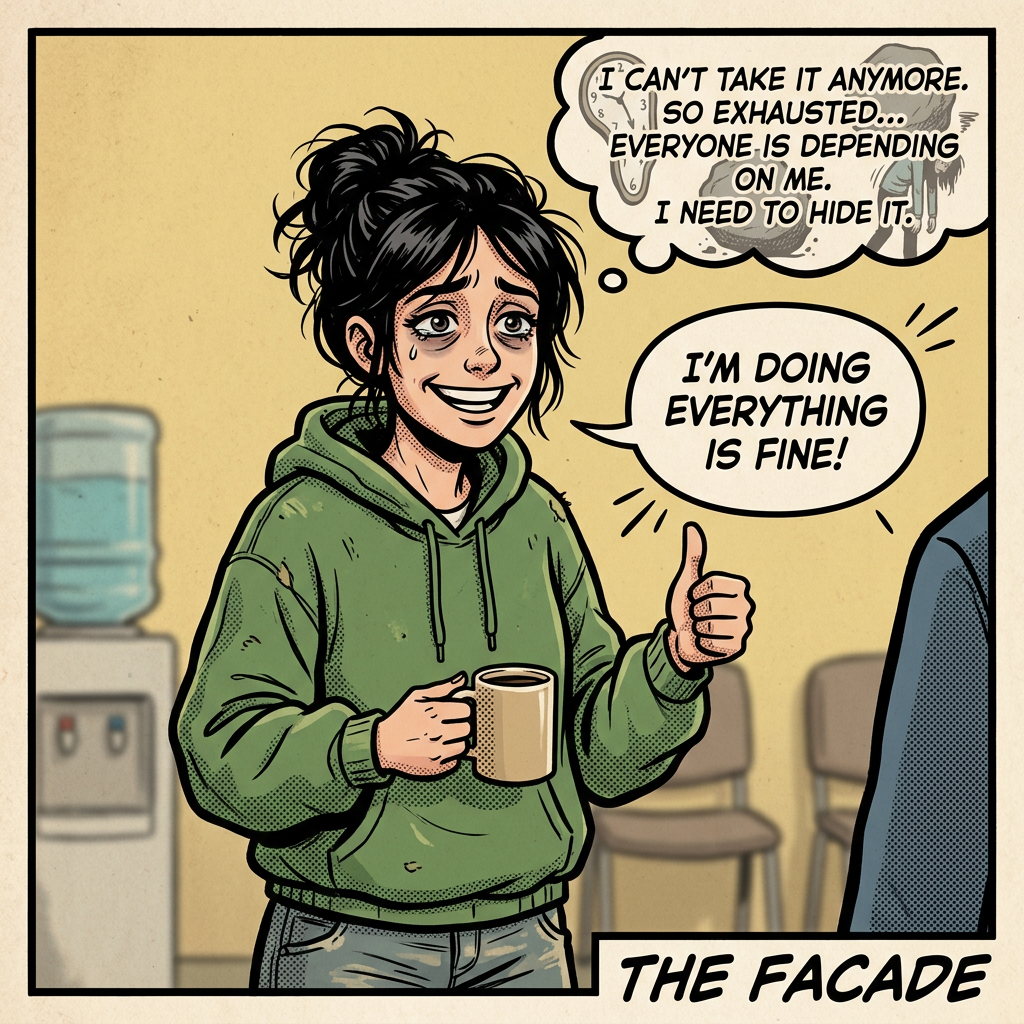
Comic panel: a woman in a green hoodie holds coffee and gives a thumbs-up, saying “I’M DOING EVERYTHING IS FINE!” Her thought bubble reads, “I CAN’T TAKE IT ANYMORE. SO EXHAUSTED... EVERYONE IS DEPENDING ON ME. I NEED TO HIDE IT.” Text below reads “THE FACADE.”
A tired worker hides overwhelming stress behind a reassuring smile and thumbs-up.

“I’m on the pursuit of happiness, and I know/ Everything that shine ain’t always gonna be gold/ Hey, I’ll be fine once I get it/ I’ll be good”- Kid Cudi.

We treat happiness like a destination. Chase it long enough, the thinking goes, and you’ll finally arrive and stay there. But that idea is backward, and it’s setting people up to feel broken for no reason.

Happiness Isn’t a Permanent State

Happiness is tied to a moment, not a lifestyle. It’s the spike you get from a specific event like getting good news, nailing a deal, or a great surprise, not a baseline you maintain forever. Psychologically, it works like a dopamine response: something raises it, then it comes back down. That’s not a flaw in the system. That’s the system.

The cultural script we’re handed says otherwise. We’re told to “pursue happiness,” as if catching it means we’re set for good. But that pursuit can become its own trap, chasing a peak as though it’s a permanent address instead of recognizing it as a visit.

What We Actually Mean Is Contentment

Most of what people call “being happy” is really contentment: a steady, low-key sense that life is okay, that you can handle what’s in front of you. Contentment doesn’t spike and crash the way happiness does. It’s the quieter, sturdier feeling underneath the highlight-reel moments.

Joy is a third, related thing — a recurring capacity to feel light and good, even though it coexists with hard stuff. The people who seem genuinely joyful aren’t immune to sadness or depression. They don’t treat hard days as proof something’s wrong with them. They feel the rough day, name it, talk about it, and move back toward joy without faking their way through the gap.

Why the “Be Happy Always” Pressure Backfires

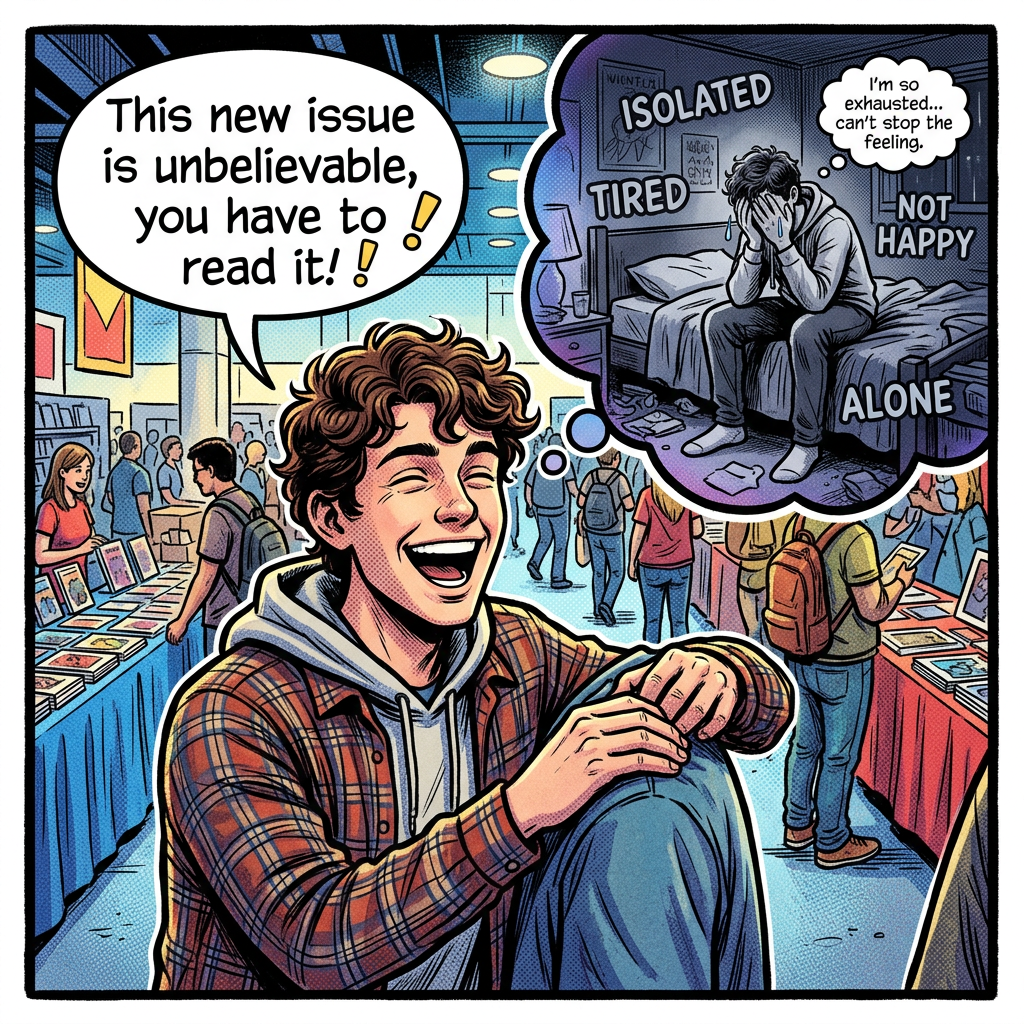
Comic text: “This new issue is unbelievable, you have to read it!” A smiling attendee imagines being isolated, tired, not happy, and alone, thinking, “I’m so exhausted... can’t stop the feeling.”
A cheerful convention attendee conceals feelings of isolation, exhaustion, and unhappiness behind a bright smile.

Telling someone they need to be happy all the time quietly tells them something is wrong with them whenever they’re not. And the truth is, no one is happy 100% of the time; that’s not a personal failure, it’s just how happiness works.

Worse, pushing nonstop happiness as the goal can edge toward something that looks a lot like mania once it’s sustained too long or too forcefully. Authenticity matters more than constant cheerfulness. A person who’s “on” all the time, no exceptions, is worth a second look, not celebration.

Faking it also has a real cost. Forcing yourself to perform happiness instead of working through what you’re actually feeling leads to burnout, and once you experience burnout, it’s much harder to recover from than an honest bad day ever was.

A Better Way to Talk About It

Sadness isn’t the same as depression. Feeling disturbed, sad, or grieving something doesn’t mean you’re broken; it means you’re human, and you’re allowed to feel it. Letting people name their emotions accurately, instead of forcing everything into “happy” or “not happy,” gives them room to actually process what’s going on.

A healthier approach looks like this: something good happens, you notice it, you sit in gratitude for it, and happiness grows out of that rather than demanding a constant happy state and panicking when it slips.

The Real Misconception

The myth isn’t that happiness exists. It’s that happiness is supposed to be constant. It isn’t, and it was never meant to be. What we should actually be building day to day is contentment and joy, with happiness as the bright, occasional spark that visits on top of them. Once we stop conflating the three, we can finally use the right language for what we’re feeling and stop mistaking an honest bad day for a sign that something’s broken.

One of my favorite songs is Kid Cudi’s “Pursuit of Happiness.” You can check out the videoà https://youtu.be/7xzU9Qqdqww?si=xdwbE1tJEFSvIPDp

Also, if you would like to buy me some Fresh Market Cookies to bring some happiness à Ko-fi.com/chemichelletales

Hitchhiker Chronicles

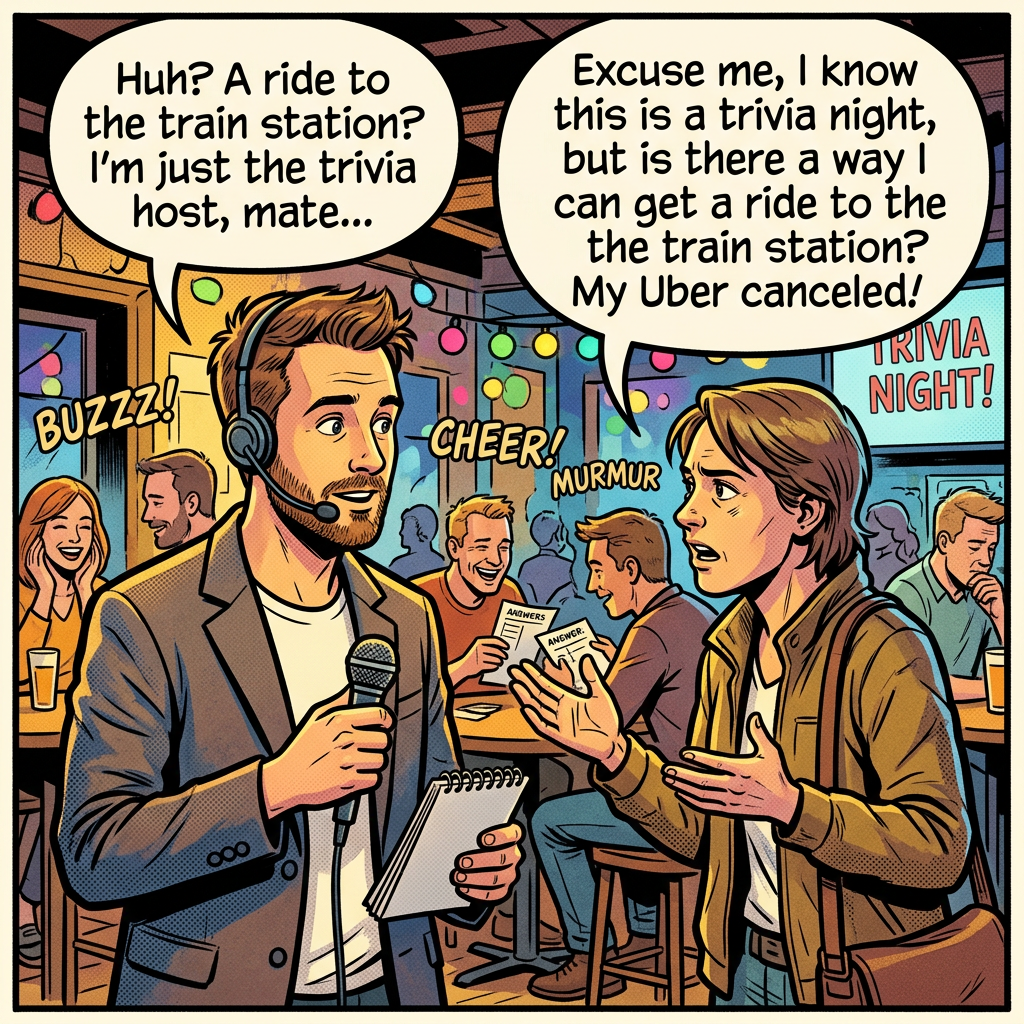
Comic scene: “Huh? A ride to the train station? I’m just the trivia host, mate...” “Excuse me, I know this is a trivia night, but is there a way I can get a ride to the train station? My Uber canceled!” Signs read “TRIVIA NIGHT!” and papers read “ANSWER”; sound effects say “BUZZZ!”, “CHEER!”, and “MURMUR.”
A trivia host tries to help a stranded guest reach the train station during trivia night.

Another WordPress writing prompt from August 2026 that I saved for this 30-day challenge. Question: What’s the weirdest coincidence you’ve ever experienced?

There is a massive neon sign invisible to the naked eye that must be tattooed directly across my forehead. It doesn’t say Welcome, and it certainly doesn’t say Sensible Adult. No, it clearly reads: Designated Shepherd of the Lost, the Confused, and the Mildly Terrifying. I have a fatal flaw. I possess a heart entirely too big for the Mid-Atlantic region, paired with a dose of Catholic guilt to prevent people from accidentally orchestrating their own demise.

Take, for instance, a rainy night at Stan and Joe’s in Annapolis back in 2024. I was hosting trivia, a respectable side hustle, that requires intense focus, reading comprehension, and the ability to ignore drunk people arguing over the capital of Nebraska. ( The Capital of Nebraska is Lincoln.) Enter a woman from the Northeast with a dream, zero grasp of Maryland geography, and a plot straight out of a low-budget indie thriller.

Between my trivia questions, she casually announced she was taking “the night bus” to Washington, D.C., to finalize paperwork on a house she didn’t want to live in. In a torrential downpour. From downtown Annapolis. At 8:00 PM. Now, anyone with a single functioning brain cell knows Annapolis public transit clocks out when the sun goes down. (I have been schooled that their transit system does not clock out at sundown, but it does not head to DC.) There is no magical night bus. No secret subway tunnel links historic dockside pubs directly to the Washington Monument. When I broke the news that she was stranded, she looked at me like I had personally canceled the transit grid. Naturally, her backup plan was to “just catch the train.” Honey, what train? I thought to myself, my left eye starting to squint.

Because the universe decided I was her court-appointed guardian angel, I had her call her friend and verified she wasn’t completely hallucinating a friend who lived in DC. Once verified, we struck a bargain: wait until I finish yelling about pop culture to the midshipmen and millennial players. I would drive her all the way to Baltimore Penn Station so you can catch an Amtrak to DC.  She agreed, and since the rain still hadn’t stopped, it was a decent deal.

Did she wait quietly? Absolutely not. While I was on the mic, she peppered me with her entire lifetime backstory, eventually announcing, unprompted, “You know, I’m a Libertarian.” Pulling out her pocket-sized Constitution.  Ma’am. I am reading a question about The Golden Girls. I do not care about your stance on America’s fiscal policy; I care that you don’t freeze on West Street.

I finally loaded this mysterious runaway into my car. I thought to myself: Was she an undercover spy? A time traveler? An alien seeking safe passage out of Anne Arundel County? Was a black SUV full of syndicate hitmen pulling up to the bar ten minutes after we left? The drama my brain created was better than any Netflix drama. I navigated construction traffic, listened to a podcast-worthy monologue about her existence, deposited her safely at Penn Station by 11:00 PM, and sped off to pick up my mother from work, wholly accepting that I am a giant sucker.

That was Hitchhiker Number One: a woman who weaponized sheer helplessness.

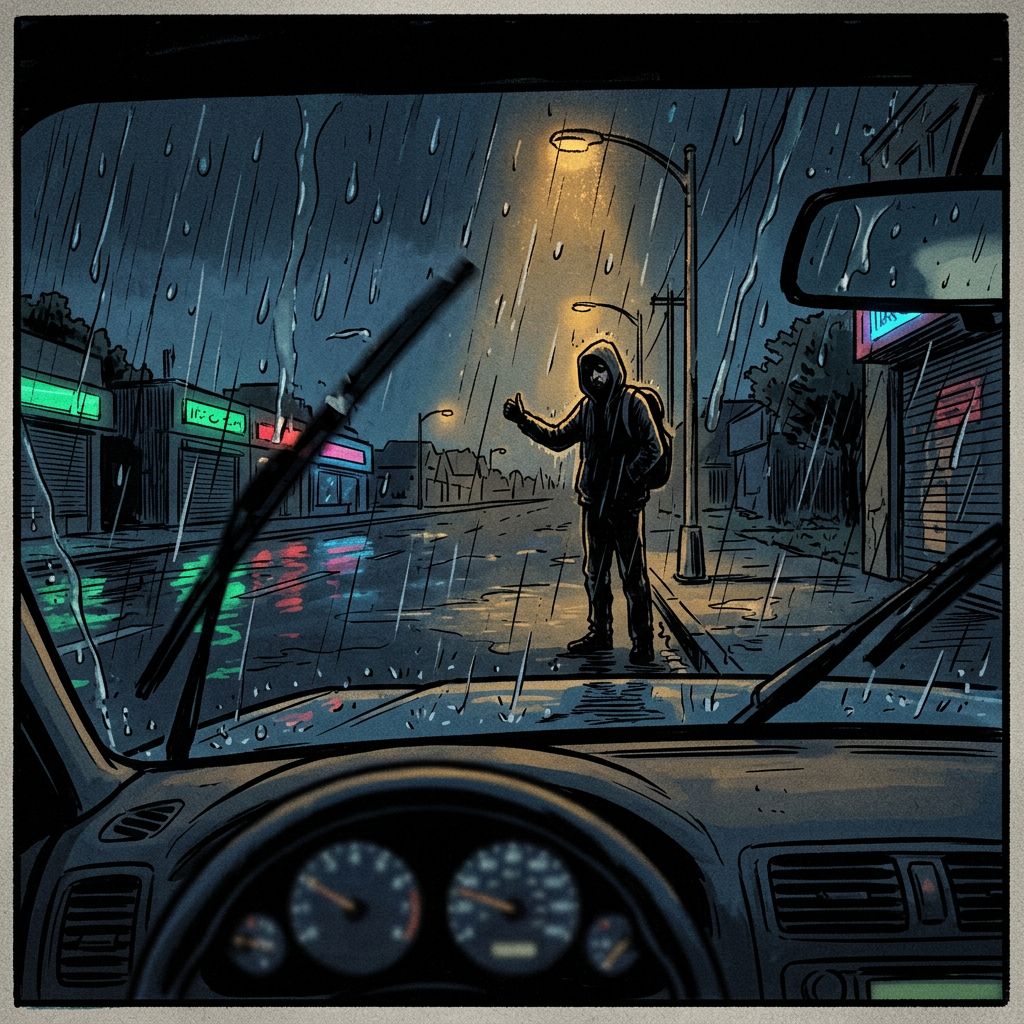
Hooded pedestrian standing in a rainy street viewed from inside a car
A driver watches a hooded pedestrian through a rain-streaked windshield on a neon-lit street.

Hitchhiker Number Two, however, skipped the paperwork and went straight for vehicular assault.

Cut to a recent evening on Edmondson Road out in Beltsville. For those unfamiliar, this is not a well-lit suburban boulevard. This is a narrow, twisty, ditch-flanked road cutting through farmland. It screams mystery episode.

I’m driving along, minding my own business and stressing about closing out tasks before starting my new job, when a man materializes out of the rural ether. Work boots, blue jeans, silver-white hair, a blue Haines T-shirt, and the pièce de résistance: a crinkly white plastic grocery bag.

He didn’t stick his thumb out like a polite 1970s nomad. He stepped into the road and aggressively lunged toward my moving vehicle, eyes locked on my door handle with the absolute determination of a zombie who missed the last commuter rail. He was getting in that car, with or without my permission.

I don’t have the calendar availability to get murdered on a country back road. I slammed the gas, violently swerved away from him, nearly pitched my entire car sideways into an agricultural ditch, and peeled out like an extra in an action franchise. The windows went up immediately.

So that is where we stand. On one end of the spectrum, I am a freelance chauffeur rescuing wandering souls from their own logistical ignorance. On the other, I am evading ambush attacks in the Beltsville brush.

I’ve since adopted a strict self-defense mechanism: I keep the passenger side of my car littered with enough junk that offering anyone a seat is physically impossible. My windows stay up, my doors stay locked, and my inner bleeding-heart Samaritan has officially clocked out!

If you would like to donate to the hitchhiker prevention fund à https://ko-fi.com/chemichelletales

I have another one I will post in a few days.

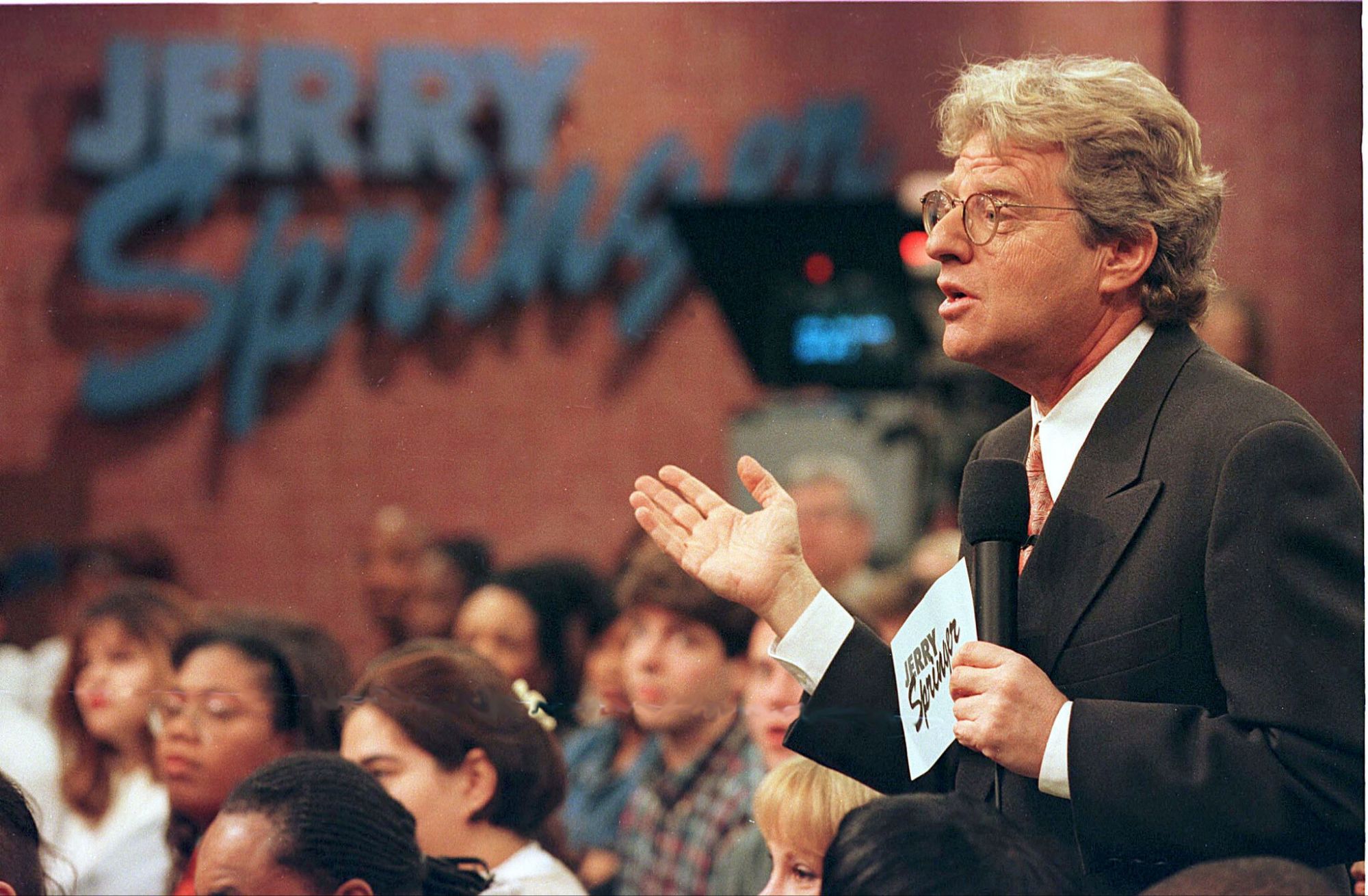
Bring Back Jerry…Well Not Quite

 The Springer Thesis: How Salacious Talk Shows Kept America Sane

Here is an unpopular opinion: we need to bring back Jerry Springer. Not the man himself, that how you end up with an undead legion of idiots. Also, God rest his soul but everything he represented. The chaos, the confrontation, the unfiltered audacity of it all. I know how that sounds. I know the reflexive response is to say that Jerry Springer was the fall of America, that Maury Povich and Sally Jesse Raphael and Jenny Jones were symptoms of everything wrong with this country. But what if we had it exactly backwards? What if those shows weren’t the disease at all what if they were the Band-Aid holding us together?

 A Brief History of the Talk Show

To understand what we lost, you have to understand what we had. I was born in 1983, which means I grew up watching this entire arc in real time. In the 1980s, the landscape was dominated by Oprah Winfrey, Phil Donahue, and Sally Jesse Raphael. These were scandalous shows by the standards of the time, but they came wrapped in a moral framework. There was always a lesson, always a reckoning, always a sense that the host was guiding the audience somewhere meaningful. Then came the 1990s, and with them the golden age of daytime television. Jerry Springer, Maury Povich, Jenny Jones, Ricki Lake these shows stripped away the pretense and gave the audience something rawer, louder, and infinitely more watchable. People aired their most embarrassing secrets on national television. Paternity tests were revealed in front of studio audiences. Estranged relatives confronted each other under hot studio lights. It was messy and it was real and millions of people tuned in every single day.

Then something shifted. By the 2000s- 2010s, the talk show had reinvented itself around the Ellen DeGeneres model celebrity interviews, feel-good segments, viral dance moments. The audacity was gone. The mess was gone. What replaced it was relentlessly positive, carefully curated, and, if we’re being honest, a little bit boring. By the 2020s, the format had nearly collapsed entirely, replaced by a fragmented constellation of social media platforms that promised to deliver the same fix but never quite could.

 What Those Shows Actually Did

Here is what nobody wants to admit: those salacious talk shows were doing real cultural work. They served functions that we didn’t recognize as functions until they were gone.

The first and most obvious was public accountability When someone with absolutely no awareness walked onto the Jerry Springer stage convinced that their behavior was perfectly reasonable, the audience disabused them of that notion immediately. Sally Jesse Raphael, with those iconic red-framed glasses and her oversized blazer, had a gift for calling people to the carpet with a kind of no-nonsense clarity that was genuinely clarifying. There was a social check built into that format. If you were living your life sideways, the talk show was a mirror that showed you exactly how sideways it was.

The second function was subtler but just as important: those shows (Springer, Ricki, Jenny Jones) scratched an itch that nothing else can scratch. World Star tried, but it never gave a true moral resolution, just drama. The drama, through juicy and satisfying to watch in other people’s lives, while your own lives remain drama free. Having a salacious talk show with a host to contextualize the issue, the drama, and calling out the delusional b*llsh!t. There is something deep in the human brain that craves this. It’s not lowbrow. It’s not shameful. It’s just simply human need and trait. And the talk show, at its salacious peak, was the only format that delivered it reliably, consistently, and at scale.

Third, and perhaps most surprisingly, those shows snuck in genuine education. I have always given credit to Bill Nye the Science Guy and Star Trek: The Next Generation for sparking my love of science. But if I’m being honest? Maury Povich and his DNA tests deserve some of that credit too. Hearing “you are NOT the father” week after week made me genuinely curious about how DNA testing worked, how paternity could be proven, what science looked like. Furthermore, it was a stern reinforcement of why people should use birth control and protection. The number of people sleeping with the whole town always had me asking about STIs.  Ricki Lake, meanwhile, was doing something quietly radical normalizing LGBTQ+ relationships and pushing back against homophobia at a time when mainstream culture was far less willing to do so. These shows were not as dumb as they looked.

 Why Social Media Doesn’t Fill the Gap

When the talk shows disappeared, we told ourselves we had something better. TikTok, Instagram, YouTube, Snapchat are an entire ecosystem of user-generated drama, available twenty-four hours a day. And yet something is missing. The itch is not being scratched. Yes, we had commentators pointing out the issues with the internet drama. It’s not the same. It lacked resolution.

The resolution was mediation and explained the moral of the story. On a talk show, there was always a host a Sally Jesse, a Maury, a Ricki whose job was to hold the space, to name what was happening, to look the person with no shame dead in the eyes and says, “you cannot be serious right now.” Forcing the party to have some accountability. The question of behavior, calling out delusional logic, was built into the architecture of the format. Social media has no such architecture. Drama on TikTok is consequence-free (sidenote not anymore, people are getting divorced, fired from jobs losing sponsorships). You can post your most unhinged behavior and the algorithm will reward you for it. There is no Sally Jesse to drag you to the carpet. There is no studio audience to gasp. There is no moment where someone you respect looks at you and says, clearly and publicly, that your life is in shambles.

And because that moment no longer exists, people no longer know their lives are in shambles. That is the real crisis. It is not that people are behaving badly, people have always behaved badly. It is that the cultural mechanism that once reflected that behavior back at them, that once made them feel the weight of public judgment, has been dismantled. We thought we were evolving past it. What we were doing was removing the mirror.

The Path Forward: Healing and Drama

The answer is not simply to resurrect Jerry Springer format. That moment has passed, and honestly, some of what those shows did was genuinely harmful, it was rooted in racism, homophobia, and the exploitation of vulnerable people for ratings. We do not need to bring that back.

What we need is the next evolution of the format one that holds onto the accountability and the drama while adding something that was often missing: healing. The talk show arc was always supposed to move in this direction. You start with the spectacle “I have sixteen baby mamas and none of them know about each other” and you work your way toward the question underneath it: “why are you like this, and what would it take to be different?” The 2000s and 2010s gestured toward this transition, and hosts like Iyanla Vanzant were genuinely trying to bridge that gap.

The clearest example of what this could look like is Karamo. He saw the void and understood it. He knew that America still needed someone to look a person in the eye and say, without flinching, that their behavior was unacceptable but he also knew that the confrontation had to be paired with compassion, with curiosity, with a genuine desire to help the person find their way out. That is the model. Call out the audacity, then do the healing work. Don’t just expose the wound treat it.

 Conclusion

Let me be direct about something. America is the spoiled, disillusioned child of the world. We have convinced ourselves that we are the greatest, the smartest, the most exceptional while simultaneously being among the most overworked, the most indebted, and the most unwilling to look honestly at ourselves. We demonized the salacious talk show because we wanted to believe we were better than it. We were not. We are not. The soul of this country will not be saved by political speeches or policy debates or any of the other mechanisms we have decided are appropriately serious. It will be saved if it is saved at all by honest, unflinching, occasionally uncomfortable public reckoning. By someone on a stage asking hard questions and refusing to accept non-answers. By a format that says: you can come here with your mess, and we will not look away from it, and we will not let you look away from it either.

Bring back the salacious talk show. Bring it back smarter, bring it back kinder, bring it back with the healing built in. But bring it back. America needs the mirror. We have needed it for a long time.

If you would like more blogs like this… or I will bring Jerry Springer Drama to your door  Ko-fi.com/chemichelletales

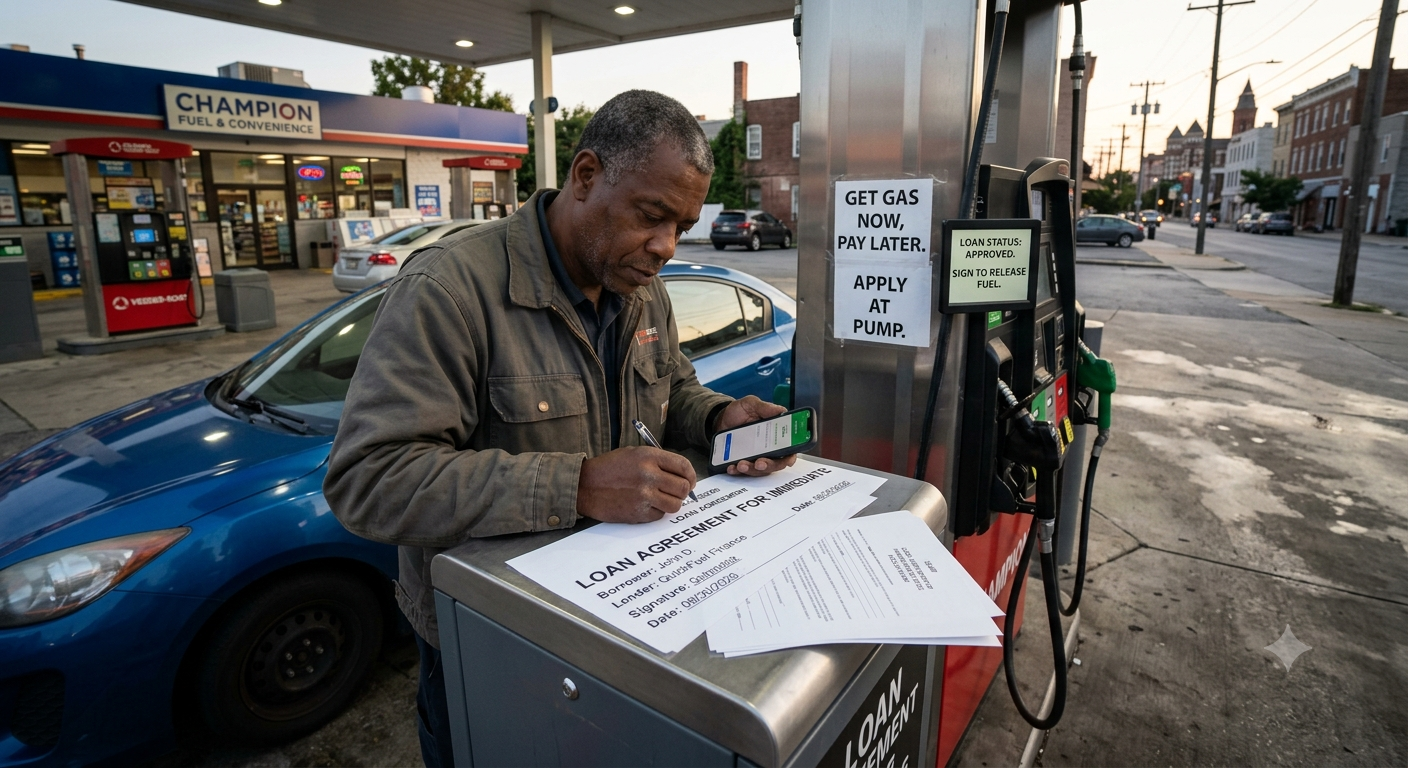
Canceling Subscriptions? Blame Gas Prices!

I’ve cracked the code for escaping subscriptions. No more pretending your card was stolen. What I found is simpler, rooted in the chaos of modern life.

Gas prices.

That’s it. That’s the whole thing. You’re welcome. But stay with me, because this is where it gets interesting.

Now hear me out before you close this tab, because I know what you’re thinking. What does gas have to do with my Netflix? The answer: everything. In today’s world, filling a tank costs as much as a car payment, and I refuse, and I mean refuse for the folks in the back to also be paying $21.99 a month just for a giant corporation to cancel every show I actually like. Suddenly, these seemingly unrelated things are intertwined, and I have connected them.

So how does this play out in real life? You call up whatever subscription has been quietly bleeding you dry for the past eight months the gym you joined in January, the meal kit service you forgot existed, the meditation app with the audacity to charge you for stress. (I’m already stressed about living in America; your little bird isn’t helping me relax!) When customer service asks why you’re canceling, you answer with full conviction: “Gas prices.” If canceling online, when they ask for a reason, type in full caps: GAS PRICES!

Not “I don’t use it anymore.” Not “I’m trying to save money.” Gas. Prices. Deliver it with the gravity of congressional testimony. Speak it as if each word costs you.

For example, you can call and say, “Hi, I’d like to cancel my gym membership.”

Customer Service Rep with a deadpan: “Can I ask why?” You think you don’t care, but you know this game. In your best political voice: “Gas prices. I can’t afford to drive there. I’ll be walking now. My commute is my workout. The sidewalk is my treadmill. God gave me legs, lungs, and allergies to challenge my breathing.”

And if they offer you a discount? You look at that discount dead in its eyes, and you say, “I need a discount at the pump. Can you do that? No? Then we’re done here.”

The brilliance of this approach is that it’s impossible to argue against. No one can claim gas prices are low or that they don’t matter. Gas prices are universally hated, affect everyone, and serve as a neutral, non-personal explanation for cutting costs. By using them as your reason, you’re making a logical and widely relatable argument.

Best of all, this strategy isn’t limited to gym memberships. It scales beautifully.

Canceling a podcast app subscription? “I can’t tell the difference between real humans and AI anymore, and I am not financially supporting the robot takeover.” Done. Cancelled. Goodbye.

Energy bill too high? Call Netflix and tell them you’ll be sitting in the dark meditating on your life choices, and you can do that for free. For free. Netflix cannot compete with free darkness.

Planet Fitness? “I’ll be walking everywhere. Gas is six dollars a gallon. My legs work. We’re done.”

Some of you are out here concocting elaborate lies, fake moves, fake financial hardships, even fake deaths of distant relatives to cancel subscriptions. Meanwhile, a far simpler explanation is right there, loud and obvious, at $5.89 per gallon. Use it! Say it with your chest! “I cannot afford this because everything costs too much, and I am one grocery trip away from an existential crisis!”

That is a complete sentence. That is a legitimate reason. That is, frankly, a political statement.

Because here’s the thing

And I mean this sincerely amid all the chaos: if enough of us start citing gas prices every single time we cancel something, we become more than individuals; we collectively challenge how unaffordable everyday life has become. We become a movement. Imagine the “Rent Is Too Damn High” Party, updated for the 2020s: now it’s about endless subscriptions and the 13 streaming services that never seem to offer anything worth watching on a Friday night.

Americans deserve a functional transit system. The American people deserve affordable energy. We deserve, at minimum, to cancel our gym memberships without a 20-minute guilt trip from a stranger named Derek. So, next time a company asks why you’re leaving, look Derek in the eye and simply say: “Gas prices.” Derek will understand. Derek, too, drives to that underpaying job.

If you would like to donate to my gas tank you can check out this link—> ko-fi.com/chemichelletales

Until Next Time,

Che Michelle

Blog at WordPress.com.

Up ↑