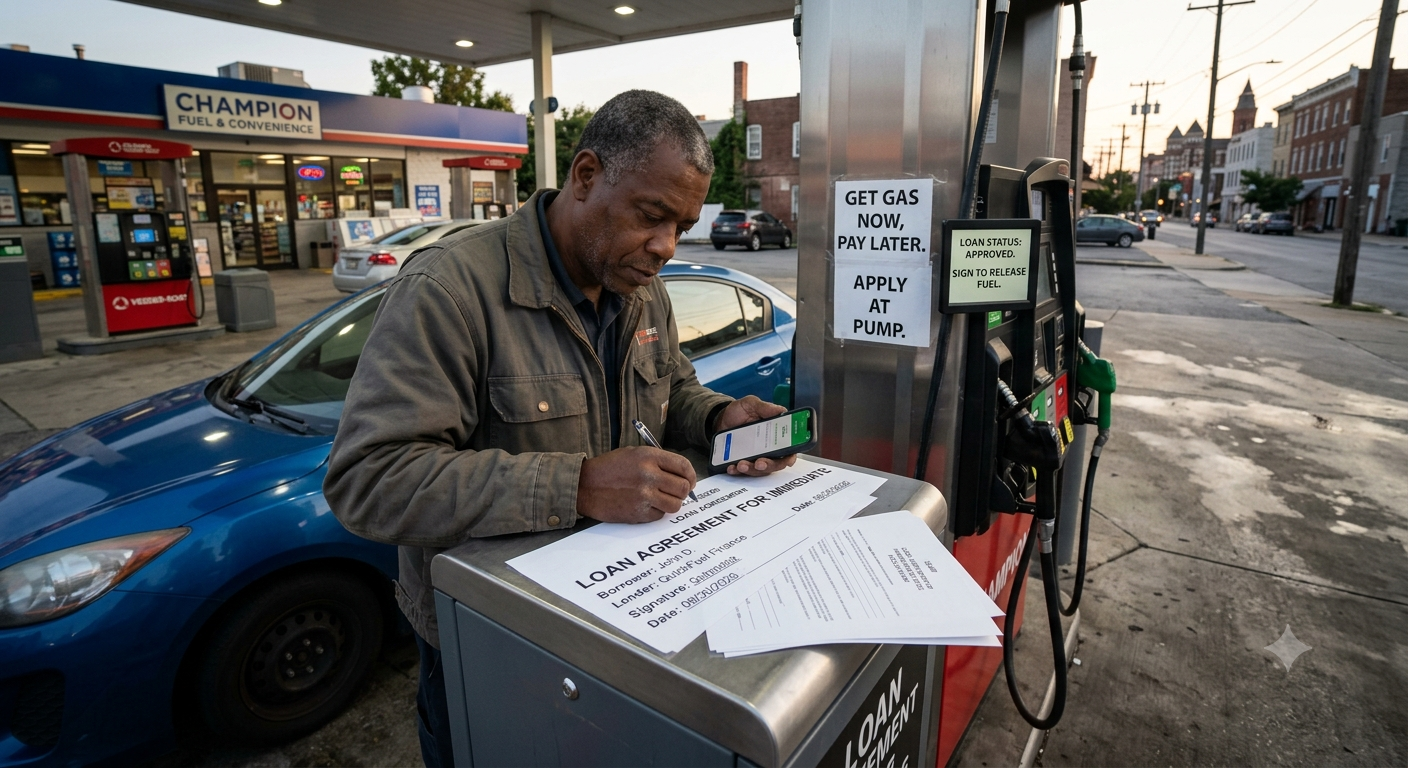
How does your mindset affect your financial success?
How Does Your Mindset Affect Your Financial Success?
Okay, pull up a chair. We need to talk about money, but not in the boring, spreadsheet-lecture way. I want to talk about the stuff nobody tells you: the mindset stuff. Because here’s the truth I learned the hard way: you can have every budgeting app, every side hustle, every “get rich” tip in the world and still stay broke if your mindset about money is broken. I know because I used to be that person. Back in the day, I had a friend,d and we would joke we was broke, phi broke. After a few years, I realized that saying that was cursing me. I had the wrong relationship with money for a long time before I realized it; I couldn’t unsee it. When I changed my mindset, my money and ability to manage it changed.
Let me give you a little background to my life. I didn’t grow up in a typical household. I grew up in a generational house, and if you’ve never heard that term, it means multiple generations under one roof at the same time. In my house, it wasn’t just my mom and me. It was my great-grandmother, my grandmother, my mother, and me four generations, sometimes five once you counted my little cousins- who practically lived with us during the week. Pause: my little cousins had two working, loving parents, and my grandmothers always offered to watch them so their parents never had to miss work. Money was tight, and family helps in times of need.
Growing up like that changes how you see money. You watch it move differently. You watch people pool resources, cover each other, stretch a dollar as a family instead of as one person on an island. It gave me a different understanding of how money actually works when people work together instead of white-knuckling it alone. When I started working at a specific fast-food restaurant, I did my part by bringing home food to help ease dinner costs.
I believe in pooling resources for the family’s greater good. I don’t think everyone is meant to move out and “do it on their own” just because that’s what we’re told success looks like. Now, if you come from an abusive or toxic household, that’s different: protect your peace, get out, build your own foundation. And if you’re just a hyper-independent person who genuinely needs your space and your privacy, I respect that too;o that’s what works for you.
But if you came from a stable, loving home with parents who are willing to show up, contribute, help with the bills, help with the kids, help with life? There is no shame in building together. Personally, if things line up the way I hope, I wouldn’t mind my own mother living with me, my partner, and my kids one day. I know she’d help watch the babies. I know she’d help around the house. She’s not going to pretend she can do everything; ng her mindset has always been “I can’t promise the world, but I’ll do what I can.” And honestly? That’s enough. That’s what family is supposed to sound like.
What I Had to Unlearn
I say all of that to explain why my money mindset was the way it was. I saw money handled in a very specific way growing up, and when I hit my twenties and stepped out into the real world, I realized I had to unlearn a lot of it and relearn how to think about money for myself.
There were five things I had to work on. I’m not going to pretend I mastered them overnight; honestly, it’s only been in the last five years or so that I’ve actually gotten good at putting them into practice consistently. But the very first one, the foundation underneath all the others, is this:
- You have to be willing to Change Your Mindset
This is step one because nothing else works until this shifts.
If you are constantly telling yourself “I’m broke,” “I can’t afford that,” “this is too expensive,” “I don’t know where I’d even find the money for this” that mindset is running your life. It’s not just a thought, it’s a pattern. And when you keep feeding that pattern, you keep proving it right. You start making decisions from a place of lack instead of a place of possibility, and that keeps you stuck in the same cycle: no money, no plan, no way out.
Here’s the part that stings a little, but I say it with love: a negative money mindset doesn’t just describe your situation it creates your situation. When you walk around convinced you’ll never have enough, you stop looking for the opportunities that could actually get you there. You talk yourself out of the job application, the investment, the conversation about a raise, the side hustle idea before you even try. That negativity becomes the thing standing between you and the life you actually want. Once your mindset shifts, the rest of the work actually has somewhere to land. Here’s what came next for me.
- Get Educated For Real This Time
Step two: take an actual personal finance class, or find someone who has genuinely walked the walk and learn from them directly. Not a random person online who just talks about money someone who has actually built something with it. I remember getting into my local credit union and honestly feeling a little embarrassed because I didn’t know half of what they were asking me. I didn’t know how to do basic things I felt like I “should” already know. I fell off track for a while after that, and I struggled for a few more years because of it. But once I actually sat down and committed to learning personal finance for real, everything started clicking differently. There’s no shame in not knowing. There is a cost to staying that way on purpose.
- Know Your Financial Personality
Step three, and this one might be my favorite: figure out your financial personality type. I know that sounds like a quiz you’d take for fun, but stay with me it’s real, and it matters. Some people are natural savers. Some are budgeters. Some are investors who are wired to think long-term and end up retiring early because of how they move with money. And some people are a mix, and that’s okay too. The point isn’t to shame yourself into one category or beat yourself up for not being “the investor type” naturally. The point is to actually identify who you are with money so you can stop fighting your own nature and start working with it. A saver trying to force themselves to be an aggressive investor overnight will burn out. A spender trying to white-knuckle extreme frugality without a real plan is going to fall off. Know your type. Build from there.
- Don’t Be Afraid to Get Help
Step four: if you get to a point where you genuinely don’t know what to do next, don’t be too proud to bring someone else in. Find a real financial professional, someone who can look at your actual numbers and help you optimize instead of guessing. I know it can feel intimidating, or even embarrassing, to admit you need that kind of guidance. But trying to figure it all out completely alone, with no outside eyes on your situation, is one of the easiest ways to end up stuck living paycheck to paycheck without even realizing how you got there. You wouldn’t try to represent yourself in court with zero legal knowledge just to prove a point. Money deserves that same respect. Bring in help when you need it.
- Build the Discipline and the Schedule
Step five: discipline. This is what ties everything else together. It’s one thing to understand your finances; it’s another to stick to a plan week after week, even when it’s boring and nothing exciting is happening. Put yourself on an actual schedule. Track it. Revisit it. The people who look like they’ve “got it together” financially aren’t magic; they’re consistent. That’s really the whole secret.
Listen, I’m not telling you any of this to make you feel bad about where you are right now. I’m telling you because somebody needed to tell me, and it took me way too long to figure it out on my own. Your upbringing shapes how you see money, but it doesn’t have to be the final word on how you handle it.
So here’s the full list, all in one place:
1. Change your mindset. Stop talking yourself into “broke” before you even try.
2. Get educated. Take the class. Find the mentor. Ask the “embarrassing” question.
3. Know your financial personality. Saver, spender, budgeter, investor: work with your nature, not against it.
4. Don’t do it alone. A real professional can save you years of guessing.
5. Build the discipline. Consistency beats intensity every single time.
You get to unlearn the parts of your money story that don’t serve you. You get to build something different, whether that’s a household full of people who show up for each other, or a mindset that finally believes you’re capable of more than “just getting by.” Start with the mindset. Everything else builds from there.
Trying to get use to posting the ko-fi link–> Ko-fi.com/chemichelletales